Artwork gallery
Each week has one featured artwork and up to two more. All are paintings, frescoes, mosaics, icons, prints, or manuscript pages, and all are public domain or CC0.
Most works were made during their century. Where a century has no suitable work, the unit uses a famous later painting of its events and says when it was made. Each artwork page explains what you see, why the work matters, and how it connects to Christ and the sacraments.
Week 1: 1st century: AD 1–100
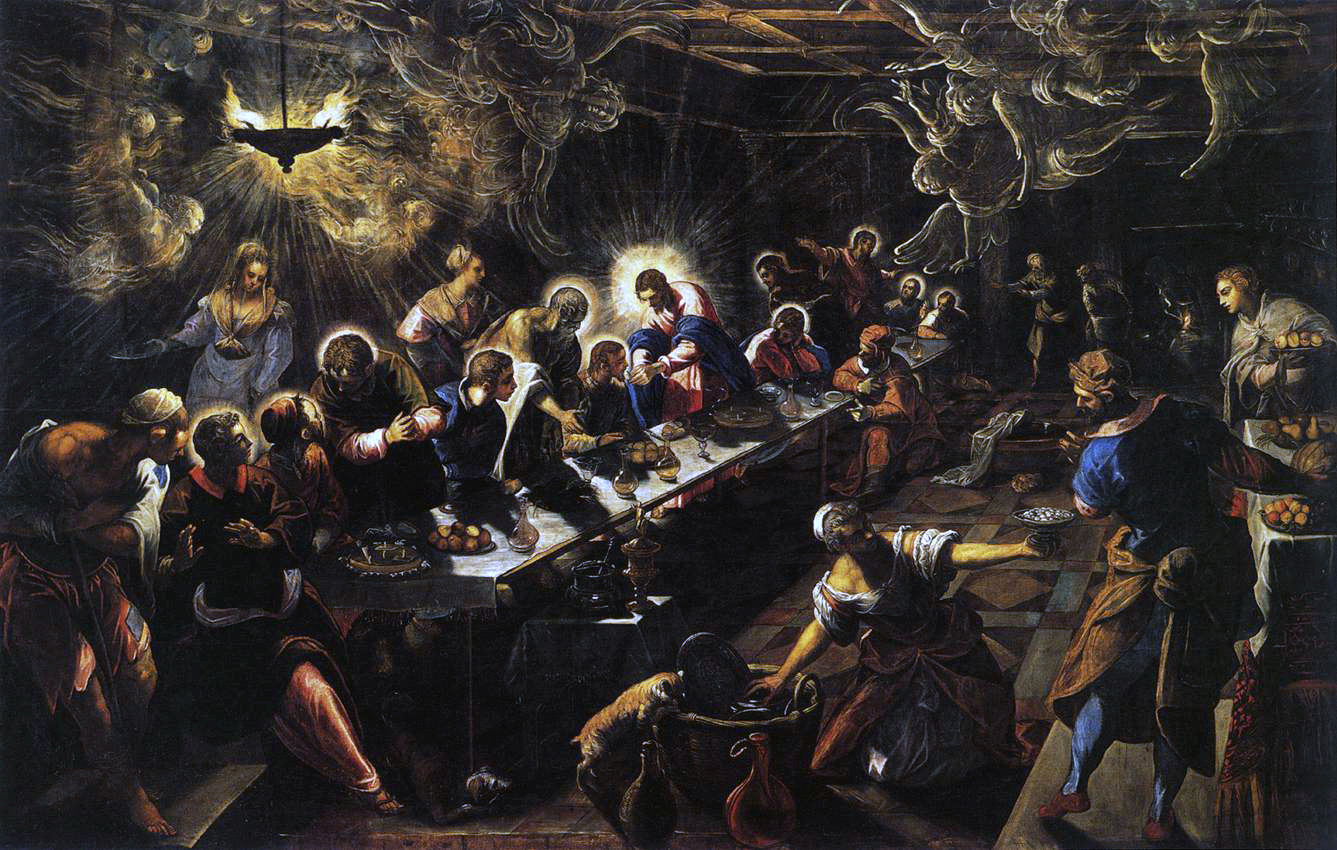
- The Last Supper. Jacopo Tintoretto, 1592–1594 (a later painting of an event in the first century).
- Pentecost. El Greco (Domenikos Theotokopoulos), about 1596–1600 (a later painting of an event in the first century).
- The Conversion on the Way to Damascus (Conversion of Saint Paul). Michelangelo Merisi da Caravaggio, 1600–1601 (a later painting of an event in the first century).
Week 2: 2nd century: AD 101–200
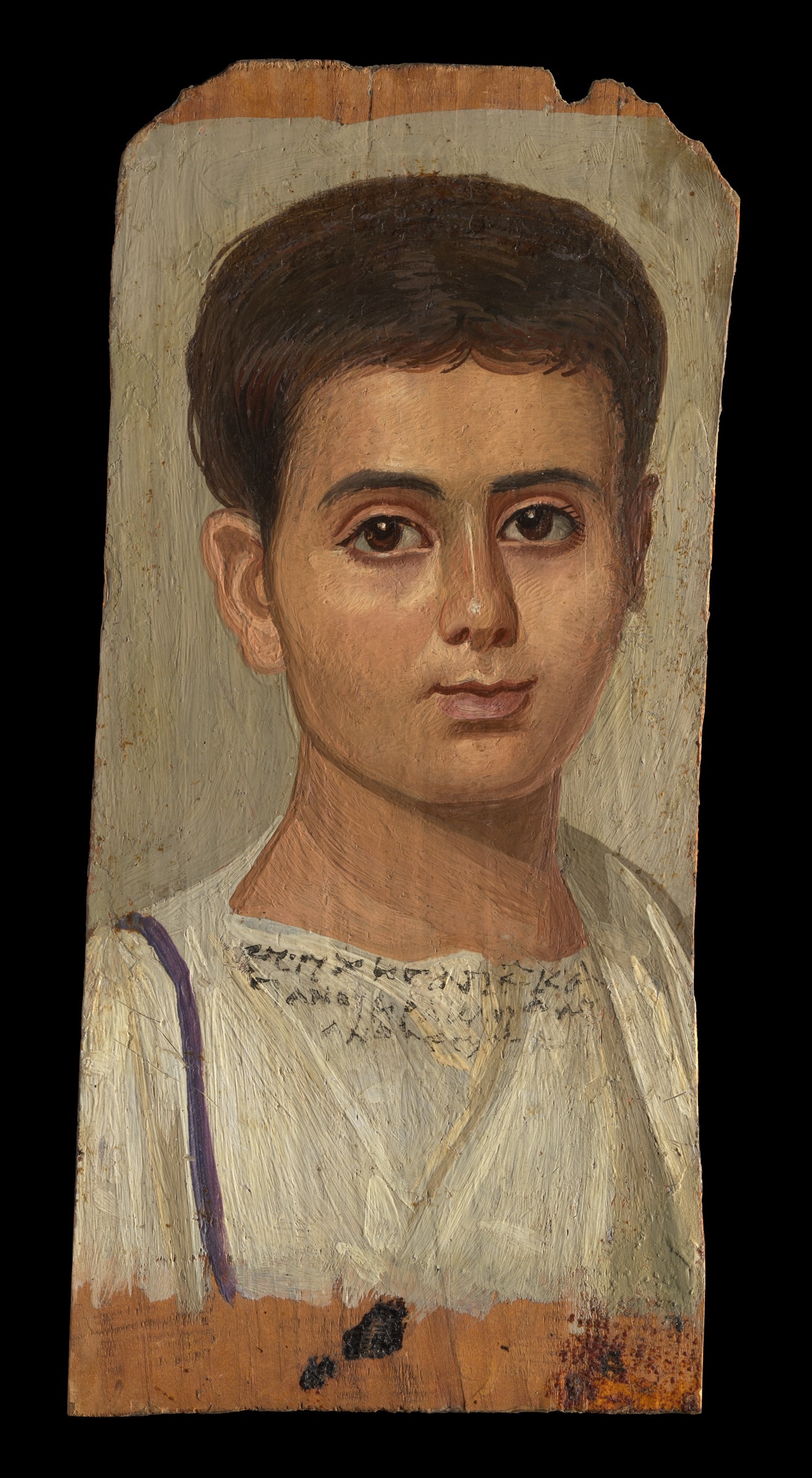
- Portrait of the Boy Eutyches. Unknown, about AD 100 to 150 (the museum’s dating, which falls in this century).
- Polycarp of Smyrna, from the Menologion of Basil II. Painters of the imperial workshop in Constantinople (Pantoleon led a team of eight named artists), about AD 1000, nearly 850 years after Polycarp died (Wikimedia Commons gives 985).
Week 3: 3rd century: AD 201–300
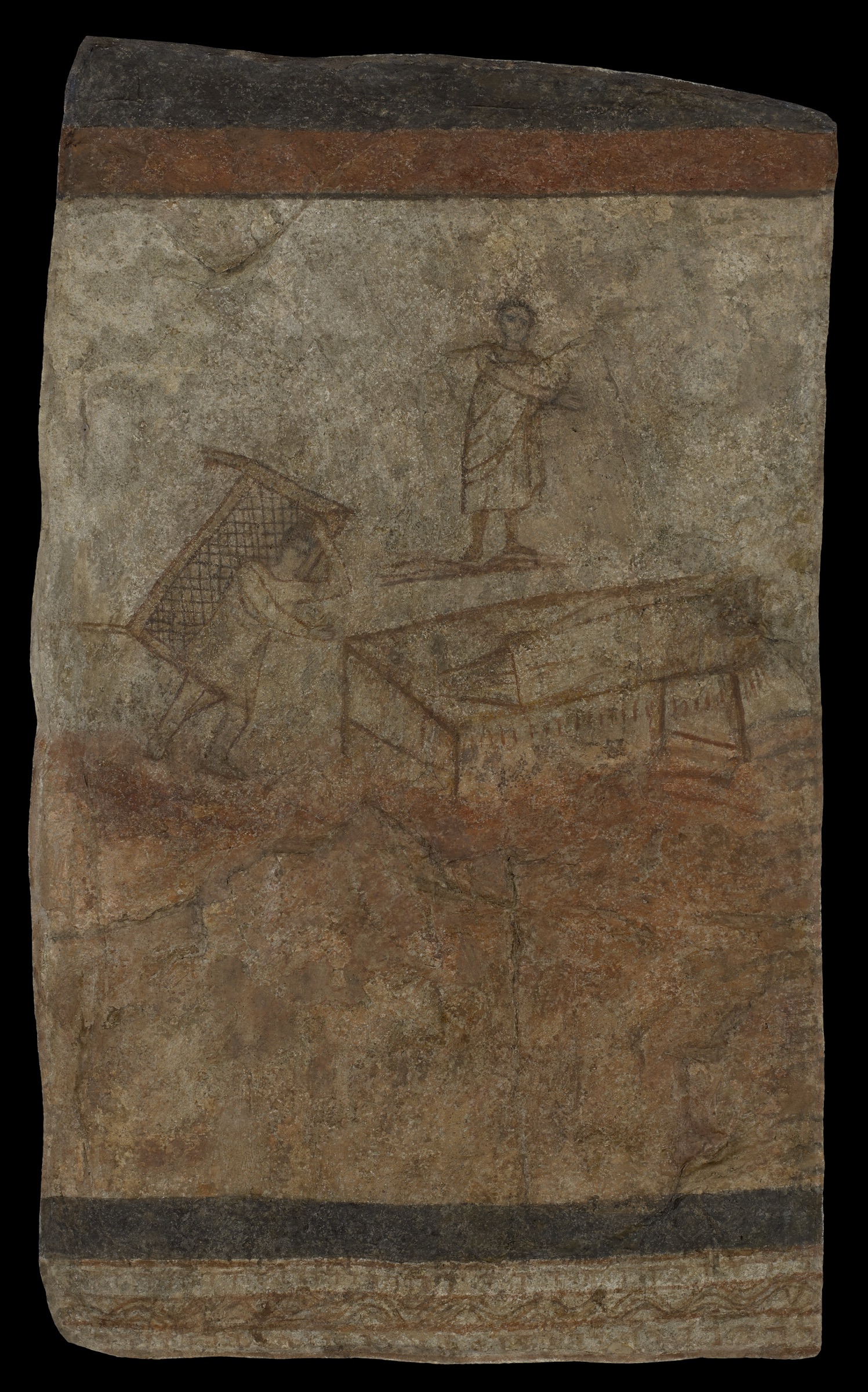
- Baptistery wall painting: Christ Healing the Paralytic. Unknown, about AD 232 to 256.
- Baptistery wall painting: Good Shepherd and Adam and Eve. Unknown, about AD 232 to 256, with the same dating notes as above.
Week 4: 4th century: AD 301–400
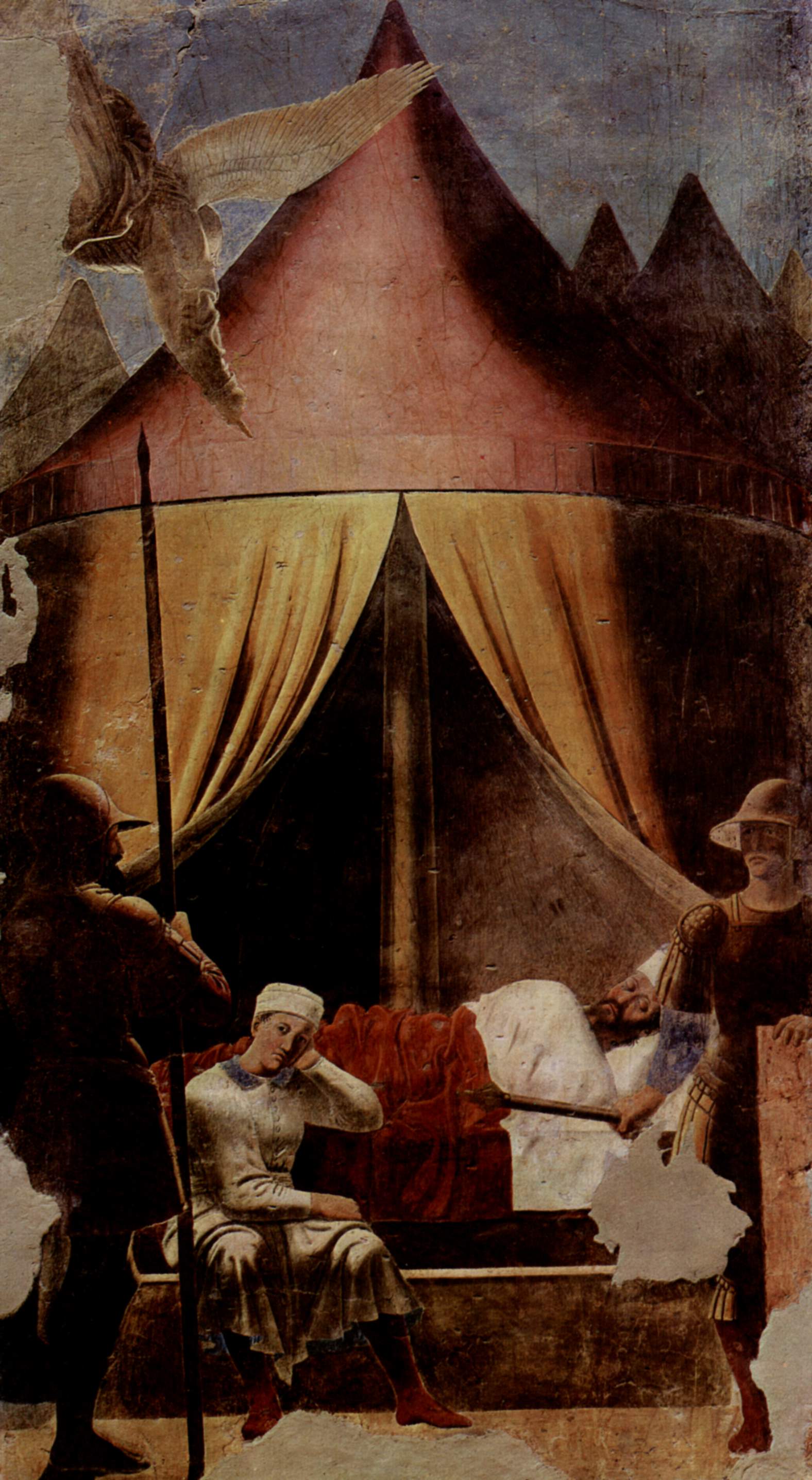
- The Dream of Constantine (also called The Vision of Constantine). Piero della Francesca, about 1452 to 1466.
Week 5: 5th century: AD 401–500
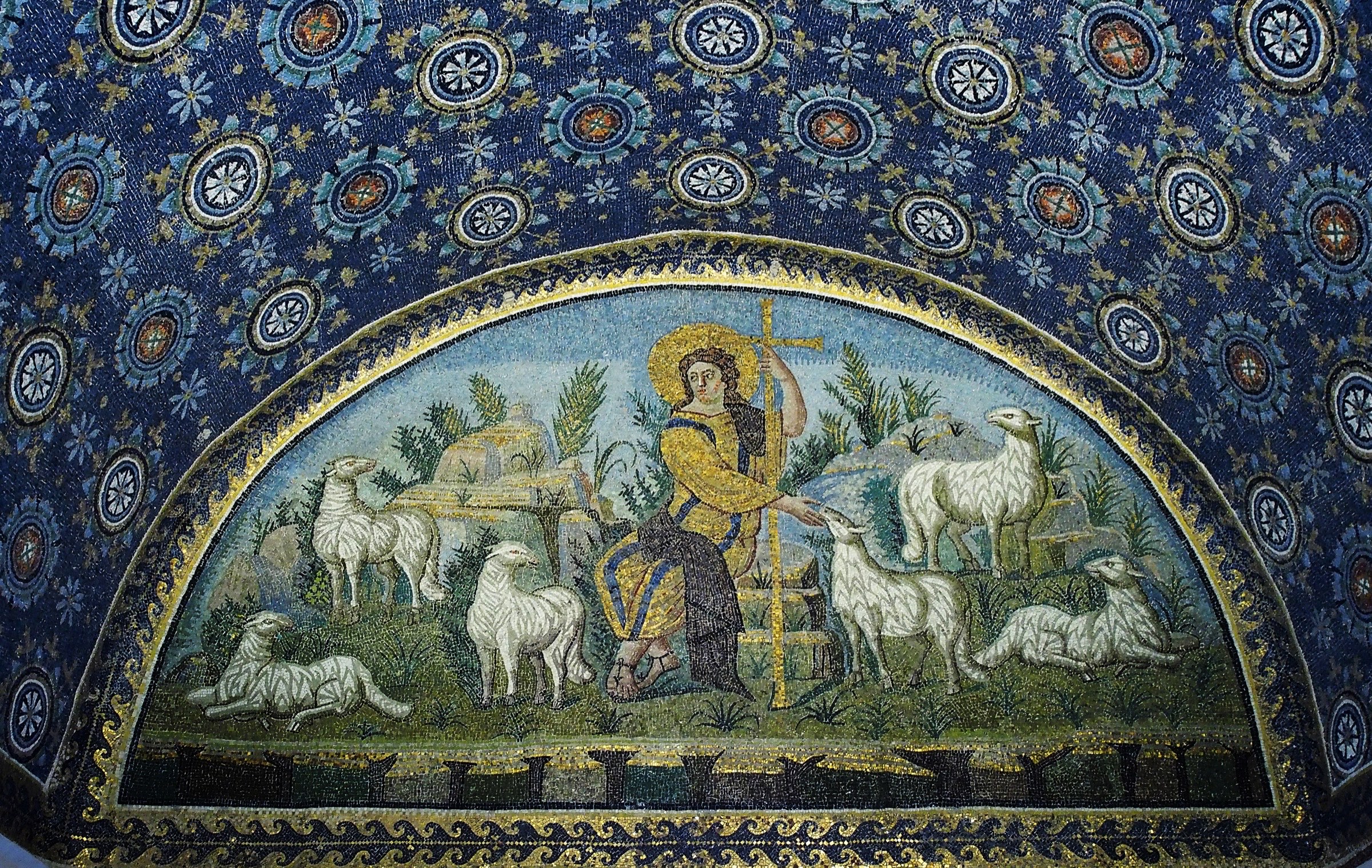
- Christ as the Good Shepherd (lunette mosaic over the north entrance). Unknown, about AD 425–450 (the building is dated between 425 and 450).
- Quedlinburg Itala fragment, folio 2 recto (scenes from 1 Samuel 15). Unknown, first half of the fifth century (the place of making is uncertain).
Week 6: 6th century: AD 501–600
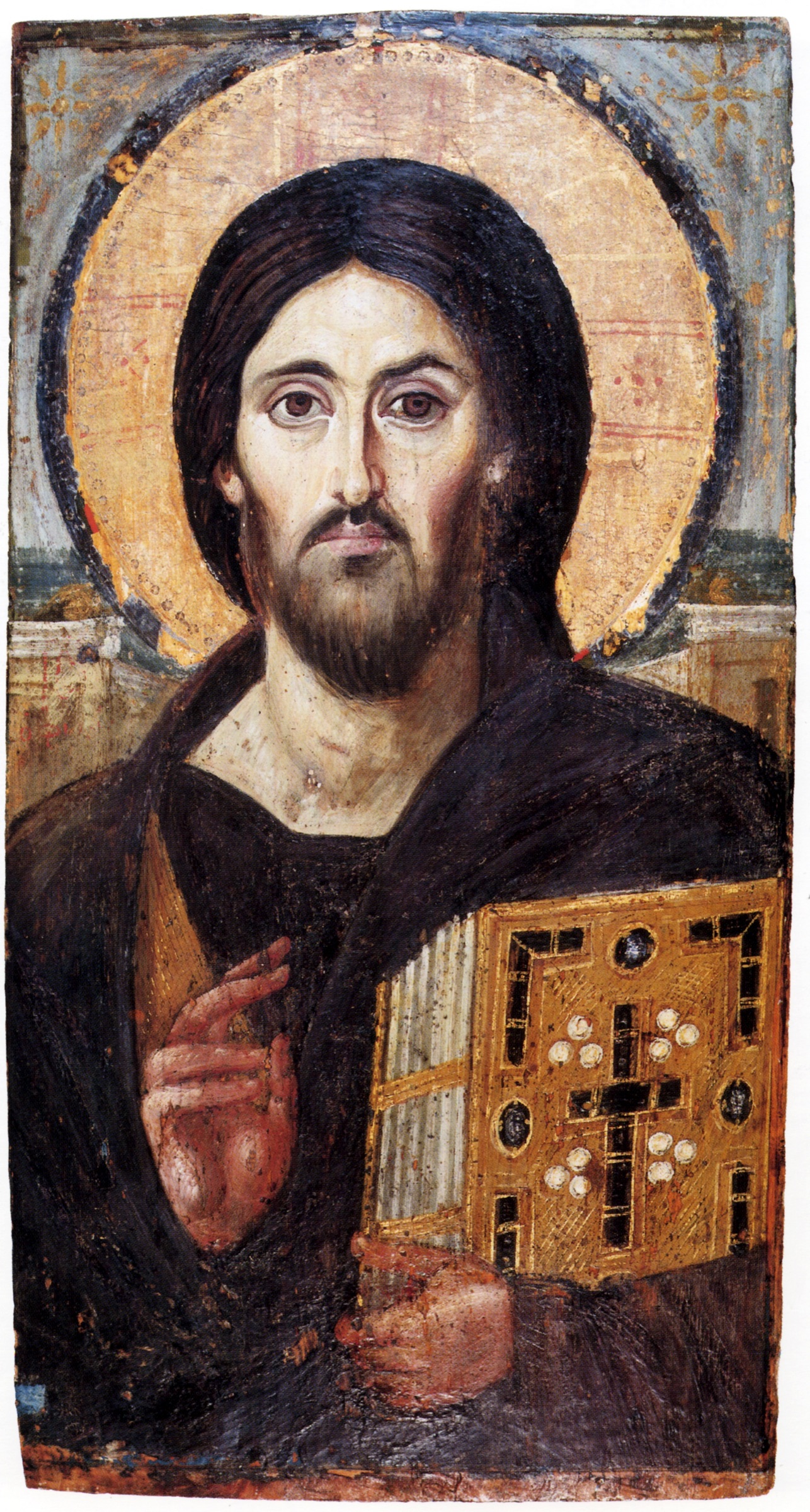
- Christ Pantocrator (icon of Christ). Unknown, 6th century (mid-sixth century by style).
- The Last Supper. Unknown, Early 6th century, in the reign of King Theodoric (the Theodoric-period mosaics date from about AD 500).
- Emperor Justinian I (detail from Justinian and his retinue). Unknown workshop in Ravenna, AD 547, the year of San Vitale’s consecration.
Week 7: 7th century: AD 601–700
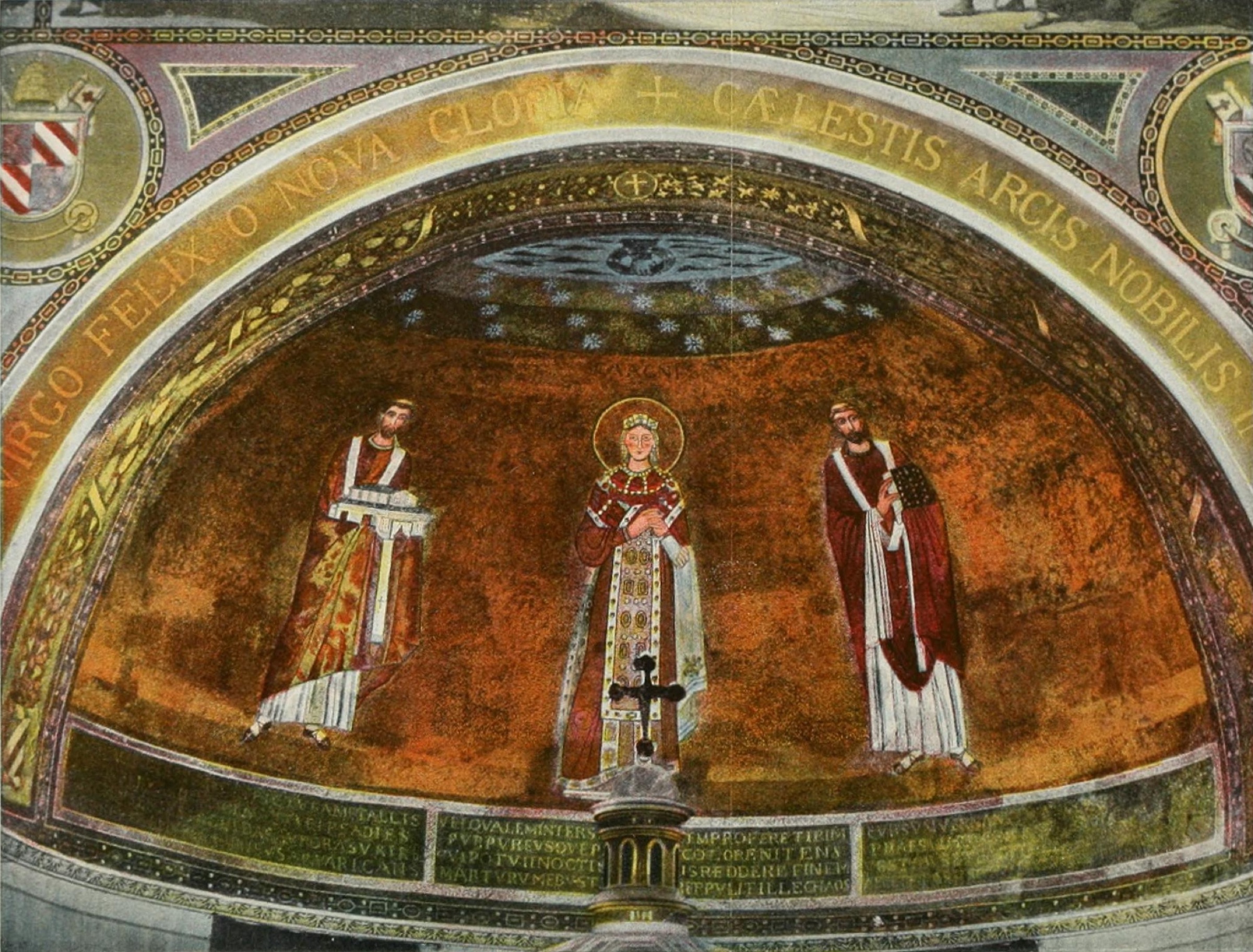
- Apse mosaic of Sant’Agnese fuori le mura (Saint Agnes with Pope Honorius I). Unknown, about 625–638, during the papacy of Honorius I.
- Book of Durrow, folio 192 verso, cross carpet page. Unknown Irish scribe and artist, about 650–700 (scholars give different dates within the seventh century).
Week 8: 8th century: AD 701–800
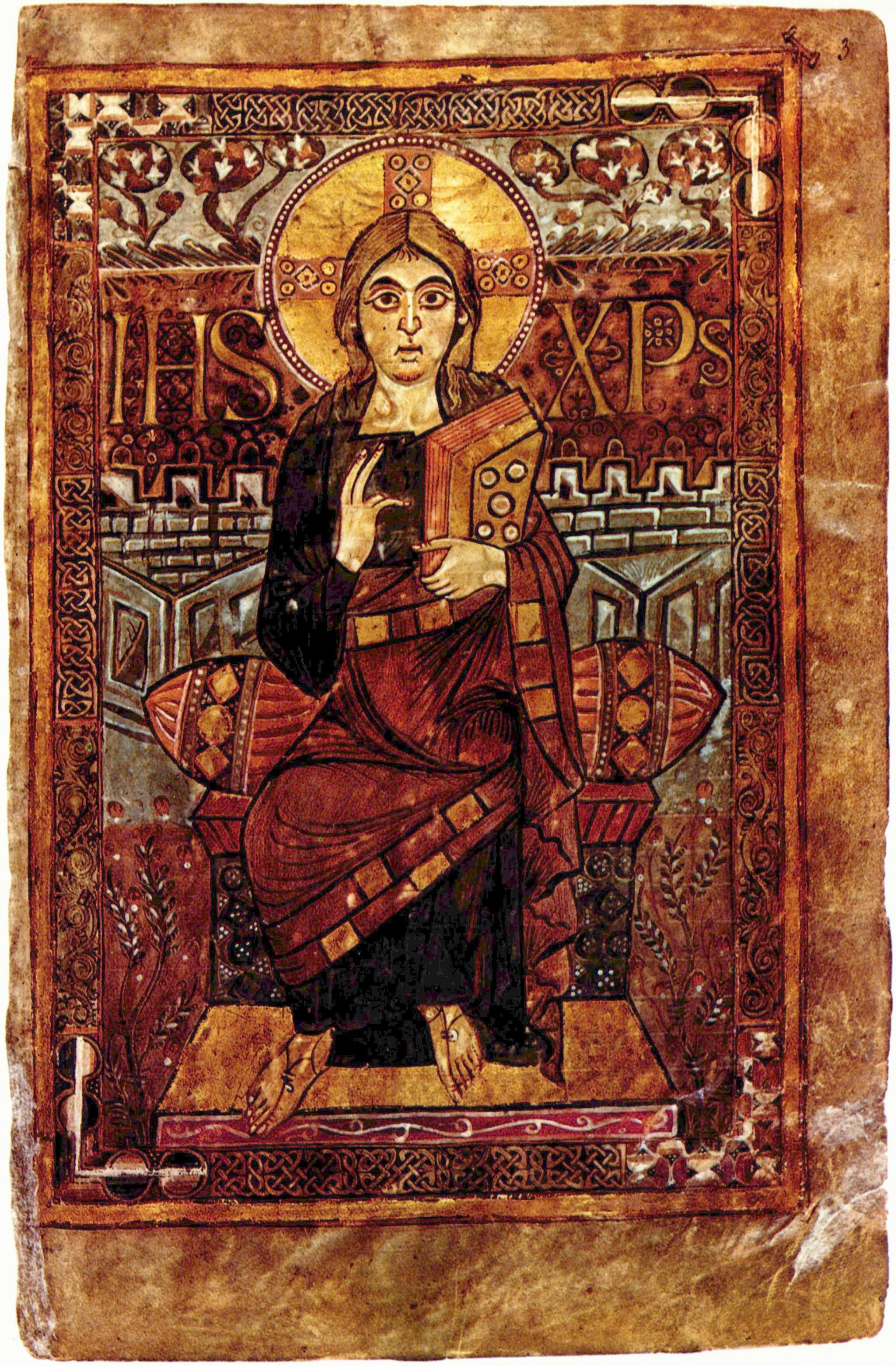
- Christ in Majesty, from the Godescalc Evangelistary (folio 3r). Unknown illuminator of Charlemagne’s court school, 781–783.
- Crucifixion and the iconoclast whitewashing an icon of Christ, Chludov (Khludov) Psalter, folio 67r. Unknown Byzantine illuminator, about 850–875.
- The coronation of Charlemagne, from the Grandes Chroniques de France (folio 89v). Jean Fouquet, about 1455–1460.
Week 9: 9th century: AD 801–900
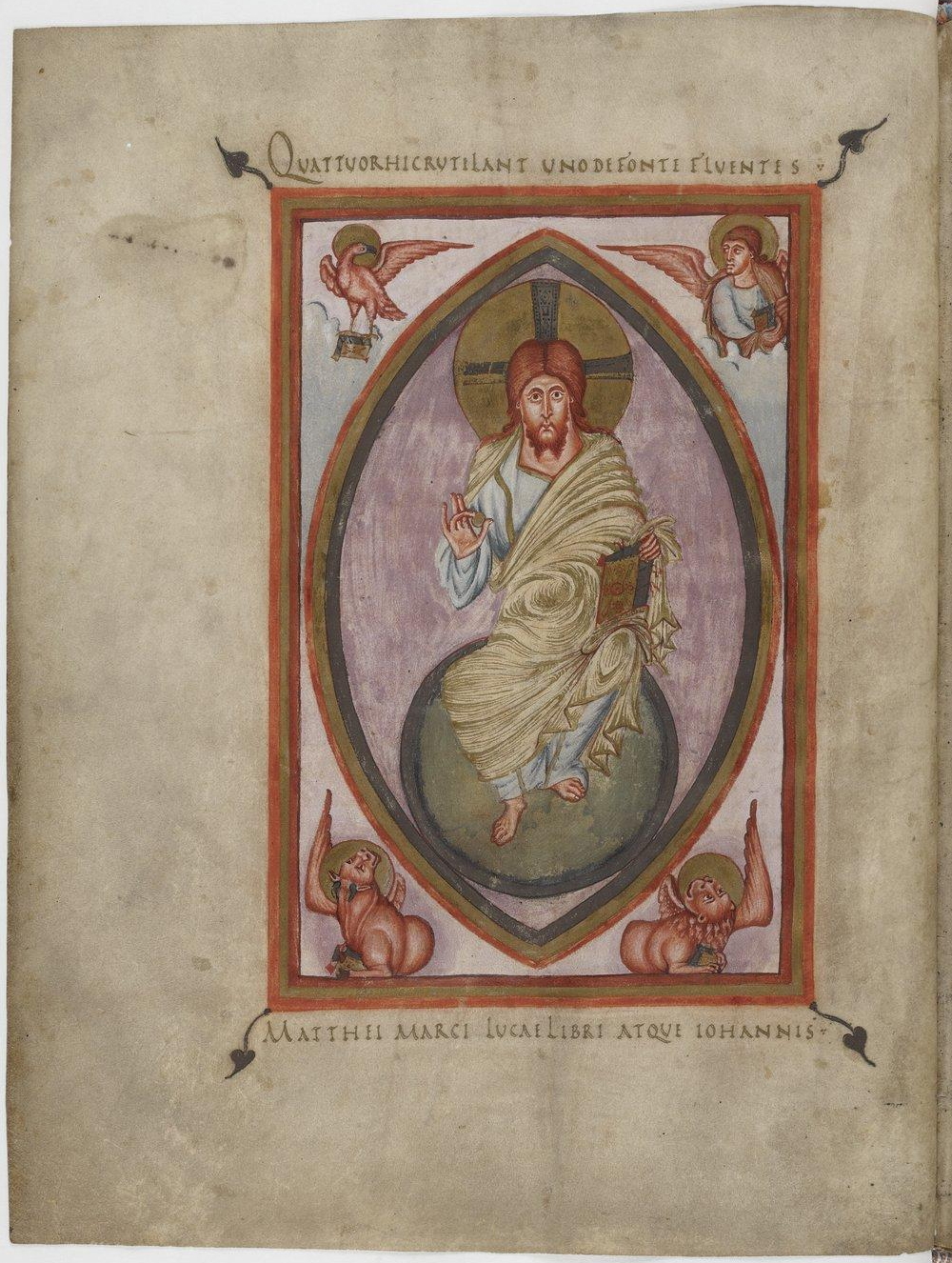
- Christ in Majesty with the Symbols of the Four Evangelists (folio 2 verso, Gospels of Lothair). Unknown illuminator of the scriptorium of St Martin’s abbey, Tours, about 849–851, in the ninth century.
- Emperor Lothair I Enthroned (folio 1 verso, Gospels of Lothair). Unknown illuminator of the scriptorium of St Martin’s abbey, Tours, about 849–851, in the ninth century.
Week 10: 10th century: AD 901–1000
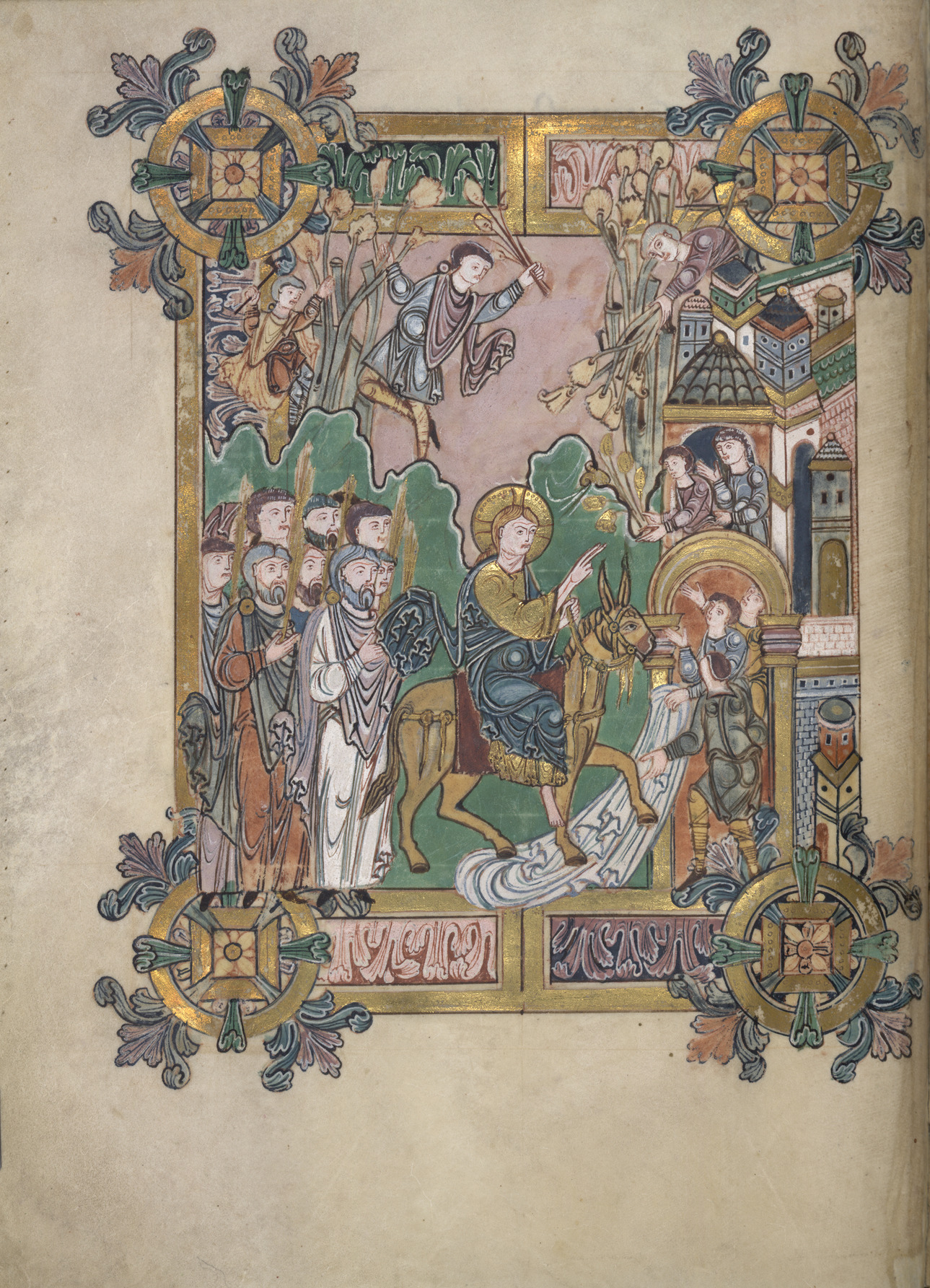
- The Entry into Jerusalem (folio 45 verso). Unknown Winchester artist, between 971 and 984 (the whole book dates between 963 and 984, probably the 970s).
- The Baptism of Christ (folio 25 recto). Unknown Winchester artist, between 963 and 984, probably the 970s.
Week 11: 11th century: AD 1001–1100
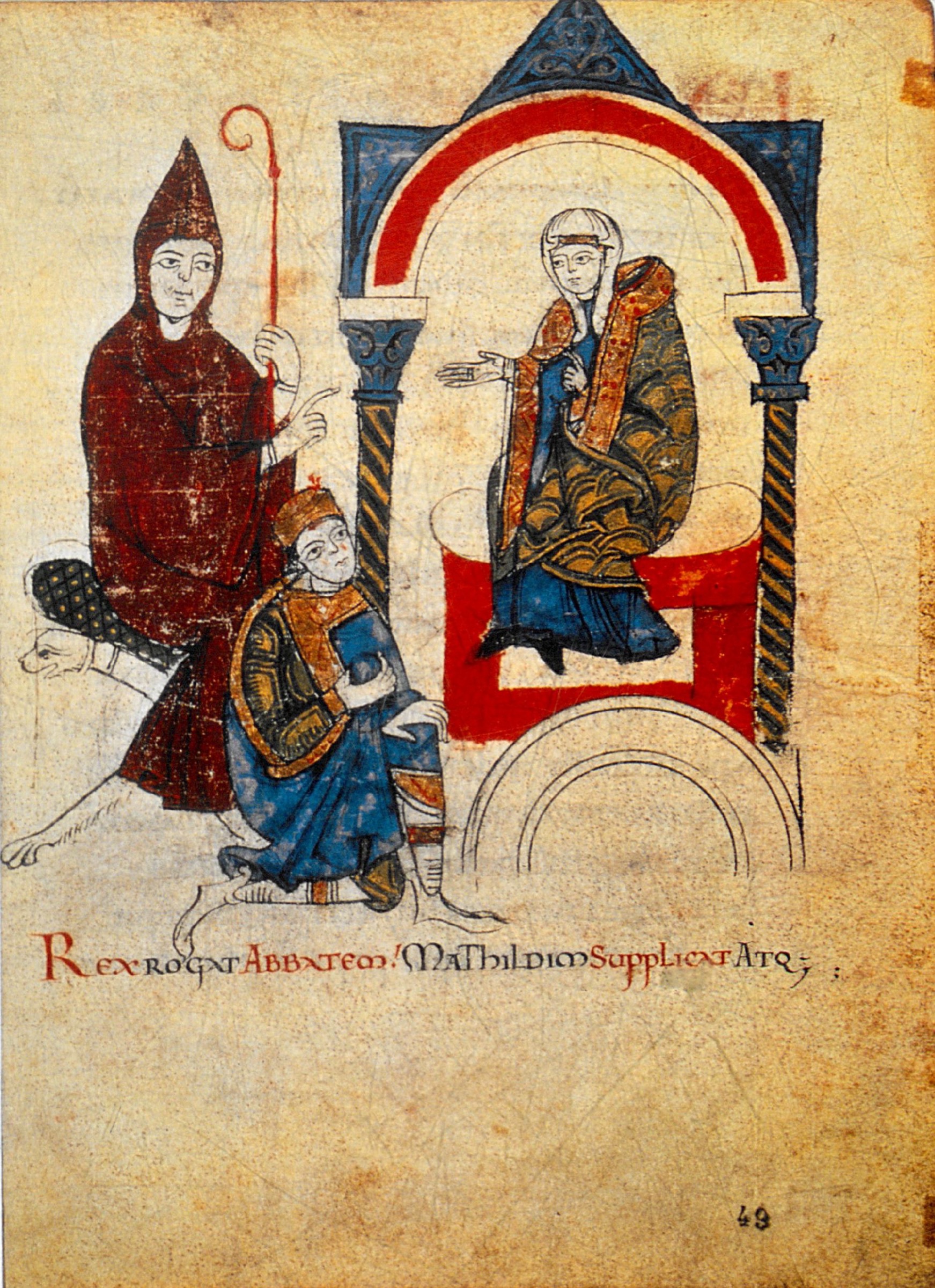
- Abbot Hugh of Cluny and Matilda of Tuscany as intercessors for Henry IV (caption: “Rex rogat abbatem, Mathildim supplicat atque”), from Donizo’s Vita Mathildis, fol. Donizo, a monk of Canossa who wrote the book, about 1115, some 38 years after the events at Canossa in January 1077.
- Pope Urban II preaching at the Council of Clermont, from Les passages d’outremer, fol. Jean Colombe, for a text by Sébastien Mamerot, about 1474, nearly four hundred years after the council of November 1095.
Week 12: 12th century: AD 1101–1200
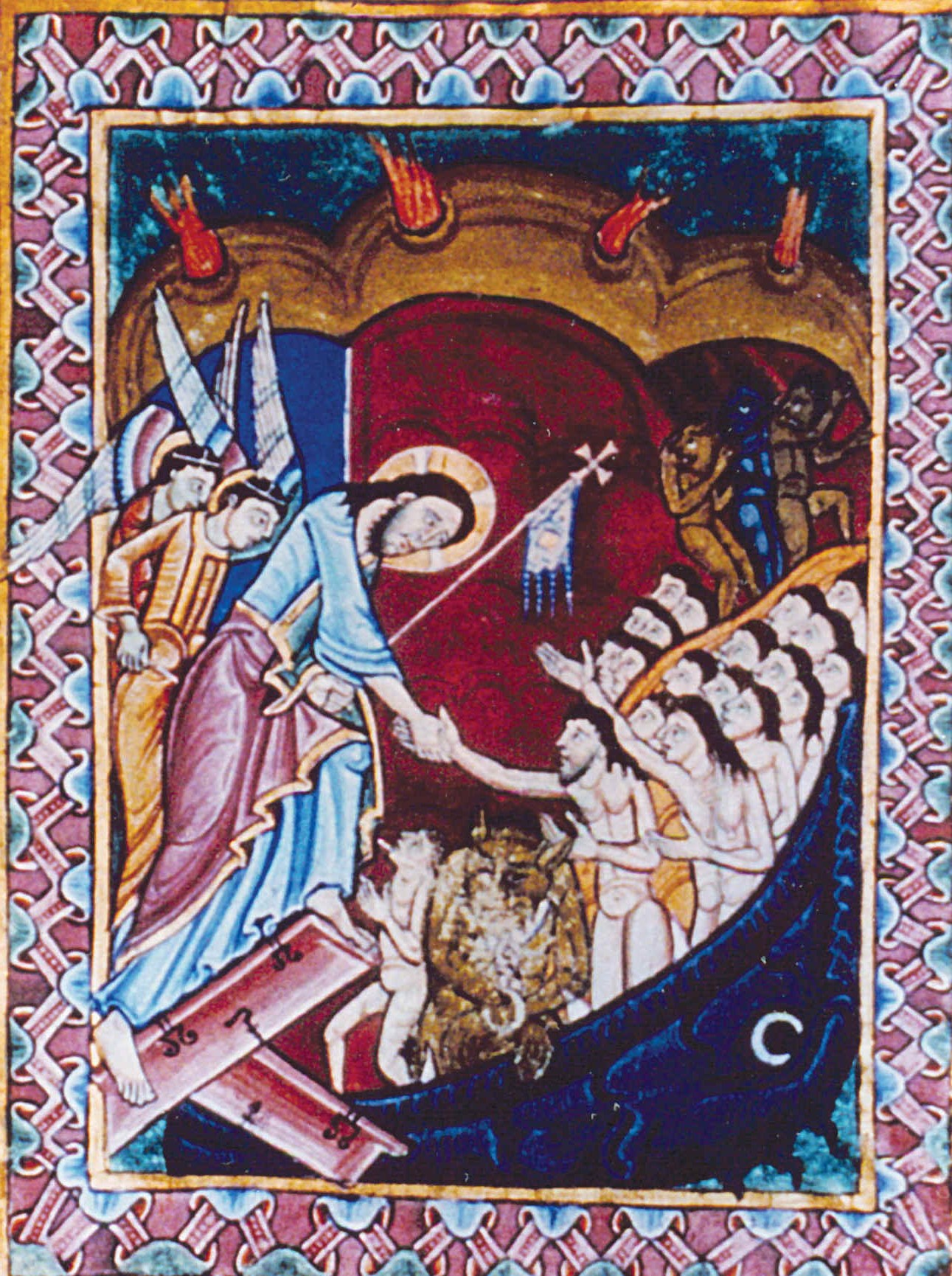
- Christ’s descent into hell (the Harrowing of Hell), miniature in the St Albans Psalter. Unknown English artist, About 1130, during the abbacy of Geoffrey de Gorham (1119 to 1146) at St Albans Abbey.
- Christ appears to the disciples on the eighth day (Thomas touches his wound, John 20:26–29), miniature in the St Albans Psalter. Unknown English artist, About 1130, same book as artwork 1.
Week 13: 13th century: AD 1201–1300
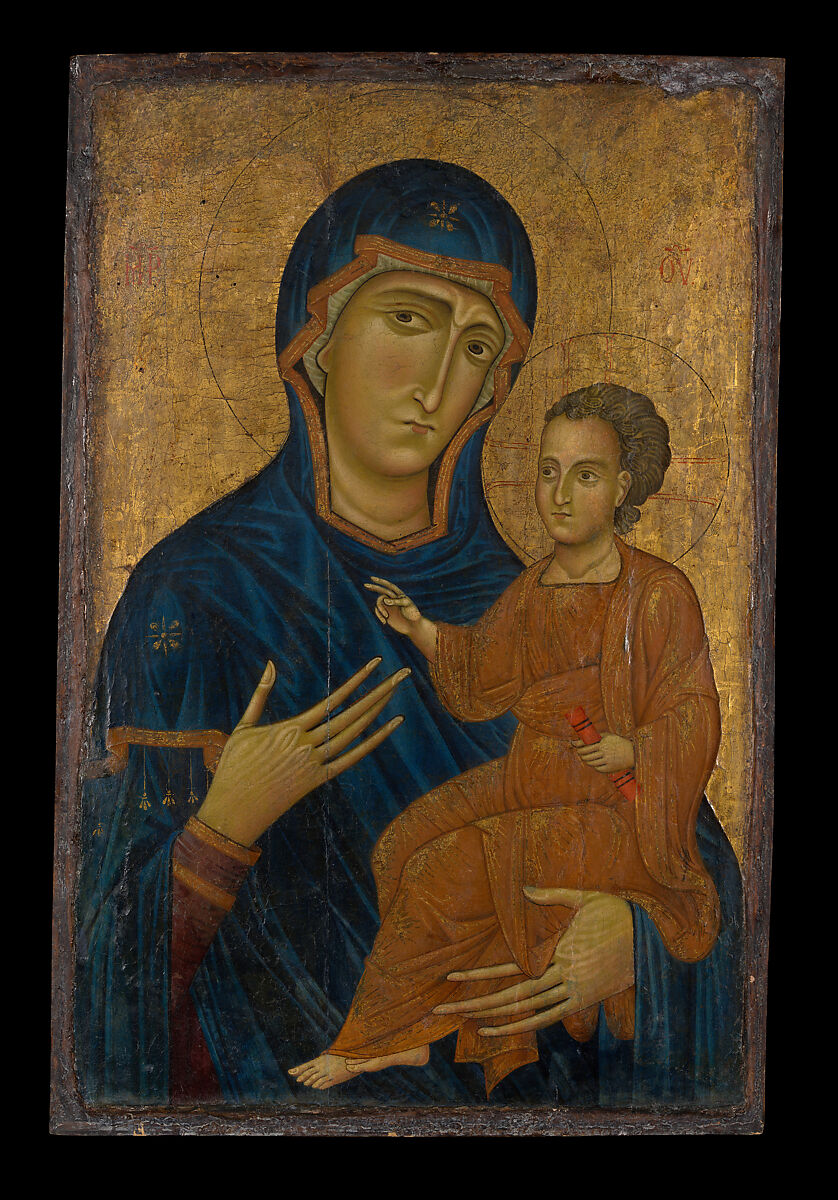
- Madonna and Child. Berlinghiero (Berlinghiero Berlinghieri of Lucca), possibly the 1230s (the museum gives no exact year).
- Saint Francis of Assisi and Scenes of His Life (the Pescia altarpiece). Bonaventura Berlinghieri, 1235 (the painted date on the panel).
- Saint Francis Receiving the Stigmata. Giotto di Bondone, about 1295 to 1300 by many scholars; the Louvre catalogue gives 1300 to 1325.
Week 14: 14th century: AD 1301–1400
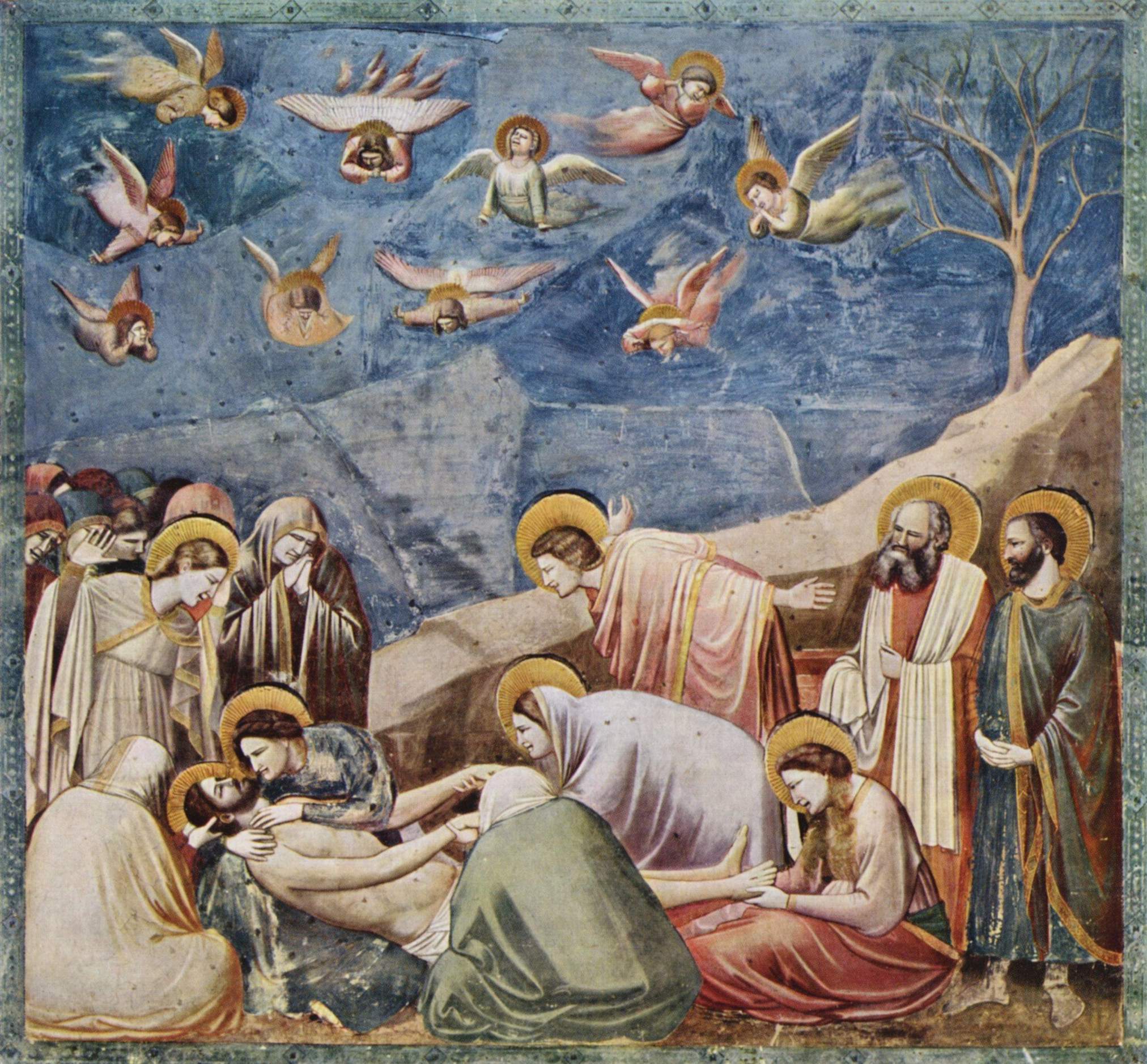
- Lamentation (The Mourning of Christ). Giotto di Bondone, about 1304–1306, during this century.
- Wycliffite English New Testament (later version), opening of the main text with the prologue to Matthew. Unknown scribe, Early fifteenth century, about 1430 by one scholar’s dating.
Week 15: 15th century: AD 1401–1500
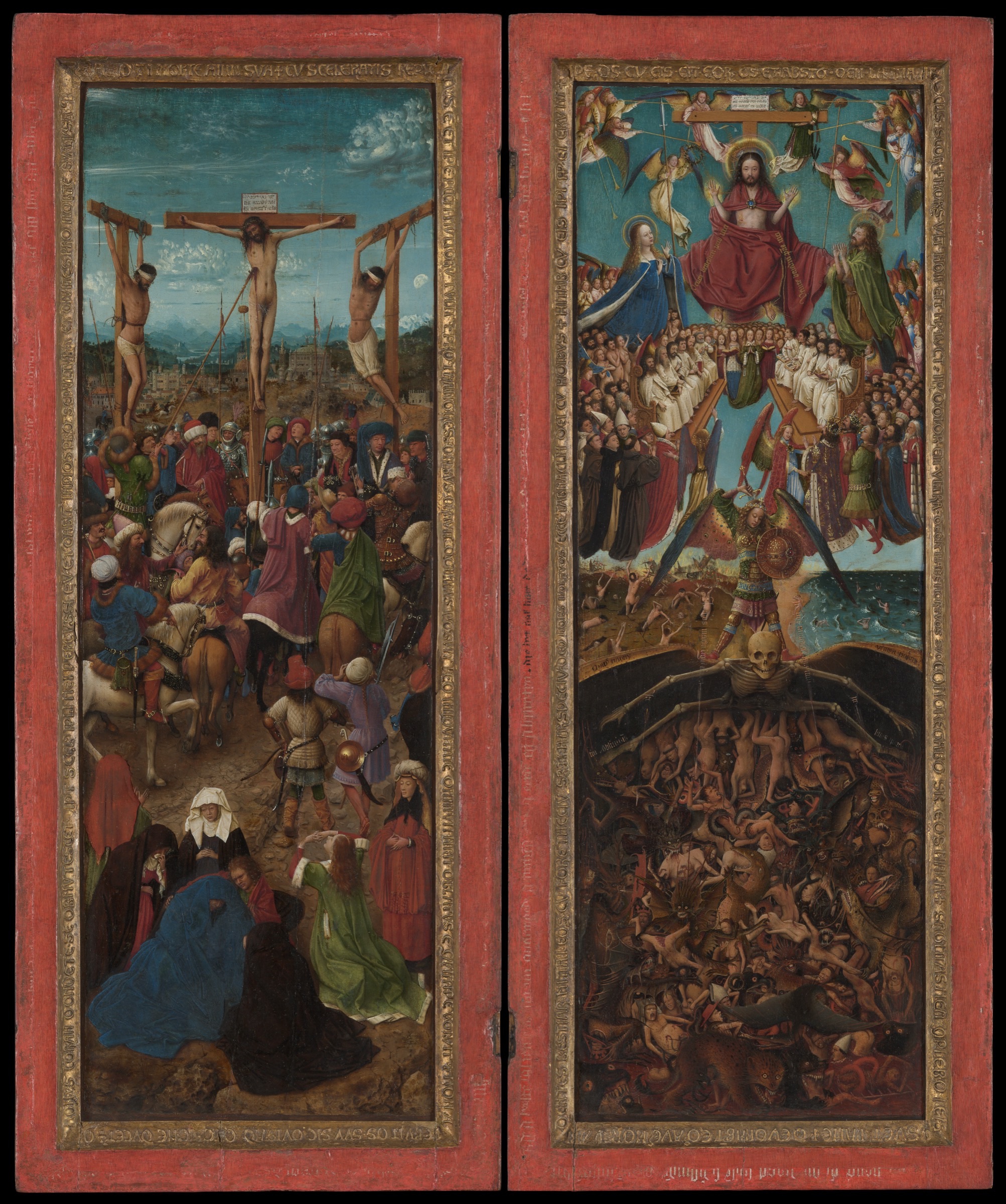
- The Crucifixion and The Last Judgment (two panels). Jan van Eyck (the Getty record adds a workshop assistant), about 1436–1438 by the Metropolitan Museum of Art.
- The Last Supper (Il Cenacolo). Leonardo da Vinci, about 1495–1498.
- Burning of Jan Hus at the stake (Spiezer Chronik). Diebold Schilling the Elder, 1485 (the chronicle was written in 1484 and 1485).
Week 16: 16th century: AD 1501–1600
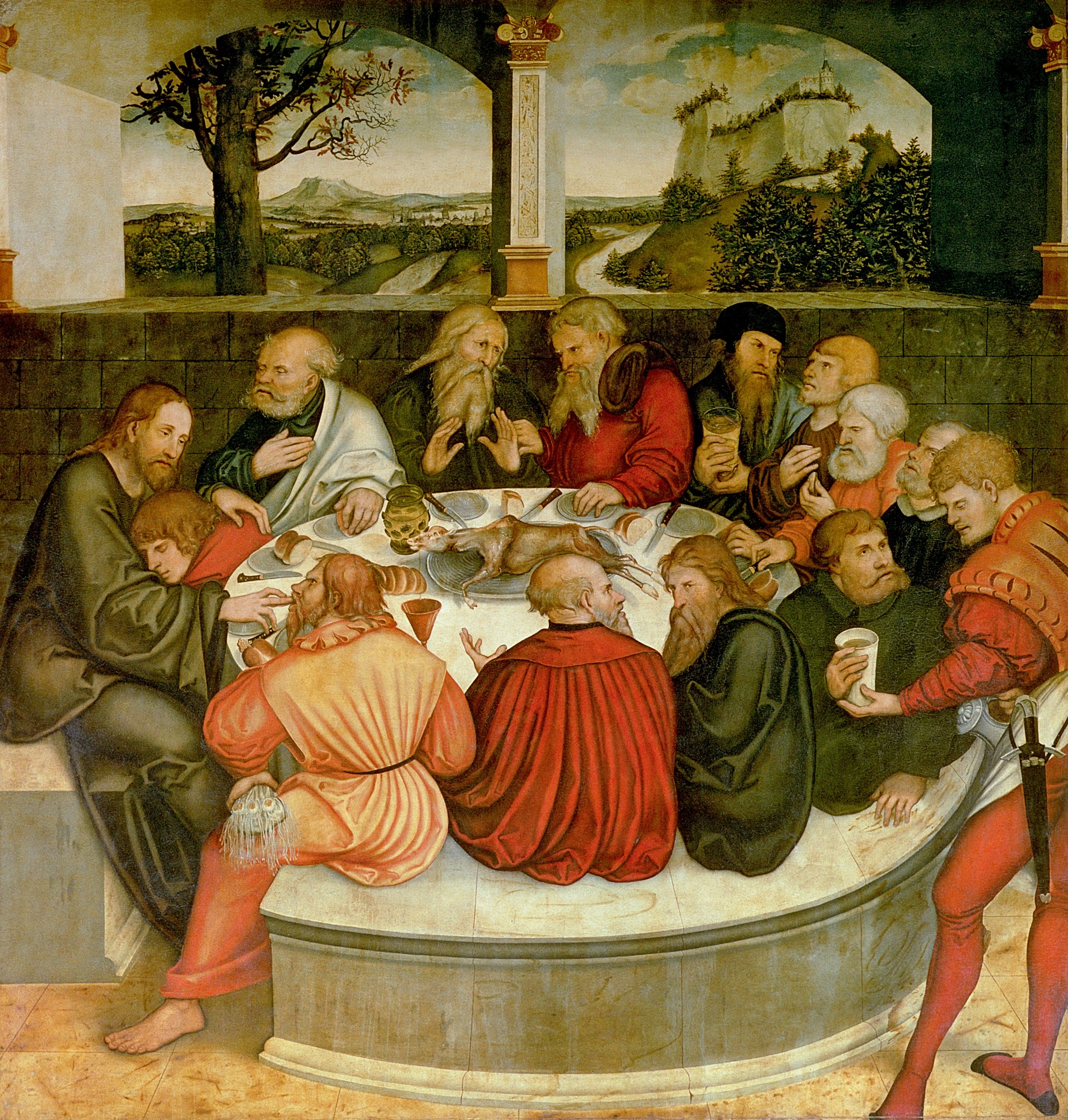
- The Last Supper, central panel of the Wittenberg Altarpiece (also called the Reformation Altarpiece). Lucas Cranach the Elder and Lucas Cranach the Younger, with their workshop, 1547 to 1548 per the Cranach Digital Archive; the altarpiece is usually said to have been installed in Wittenberg in 1547, one year after Luther died.
- Emperor Charles V at Mühlberg (Equestrian Portrait of Charles V). Titian (Tiziano Vecellio), 1548.
Week 17: 17th century: AD 1601–1700
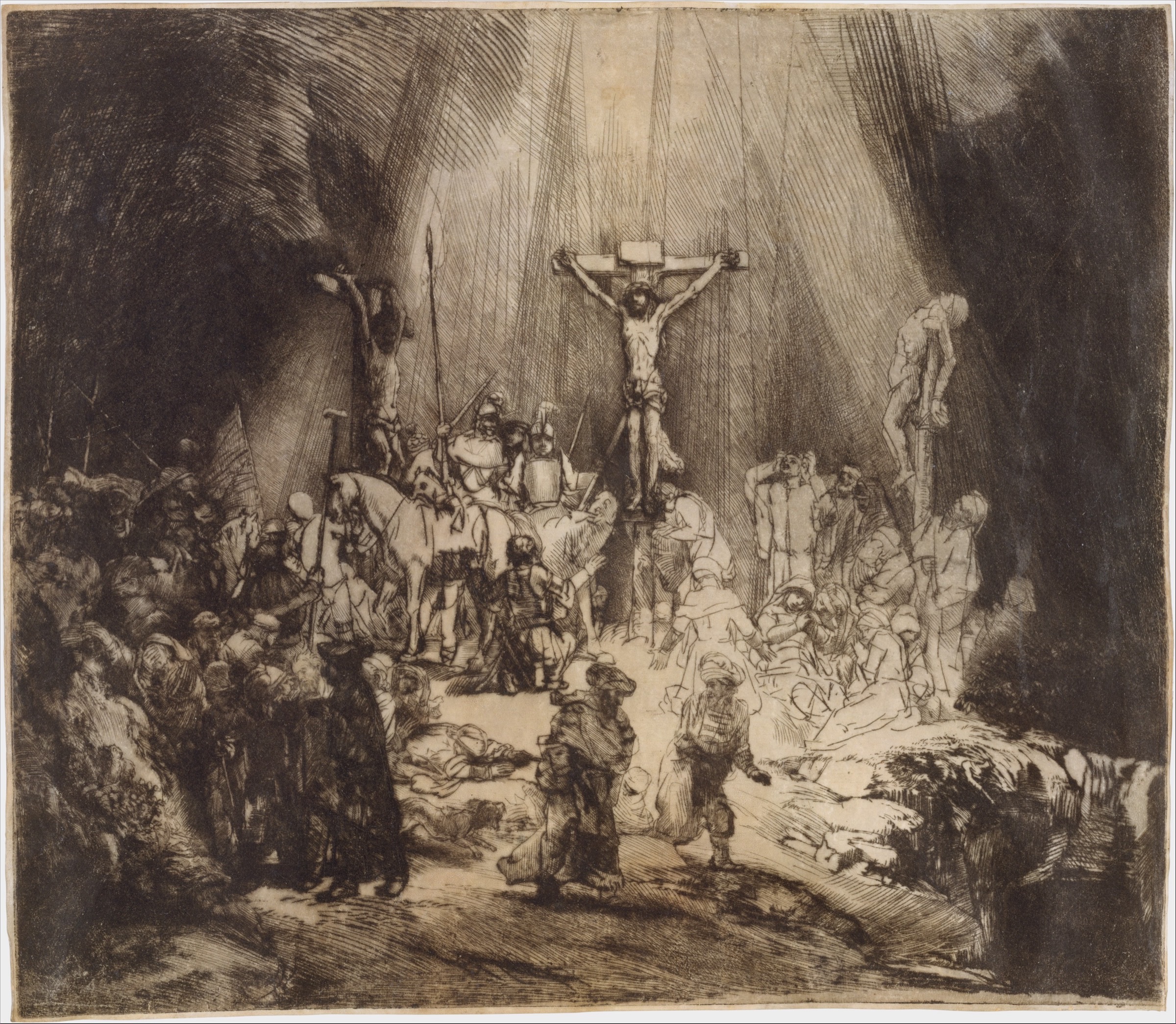
- Christ Crucified between the Two Thieves: The Three Crosses. Rembrandt van Rijn, 1653.
- The Swearing of the Oath of Ratification of the Treaty of Münster. Gerard ter Borch, 1648.
Week 18: 18th century: AD 1701–1800
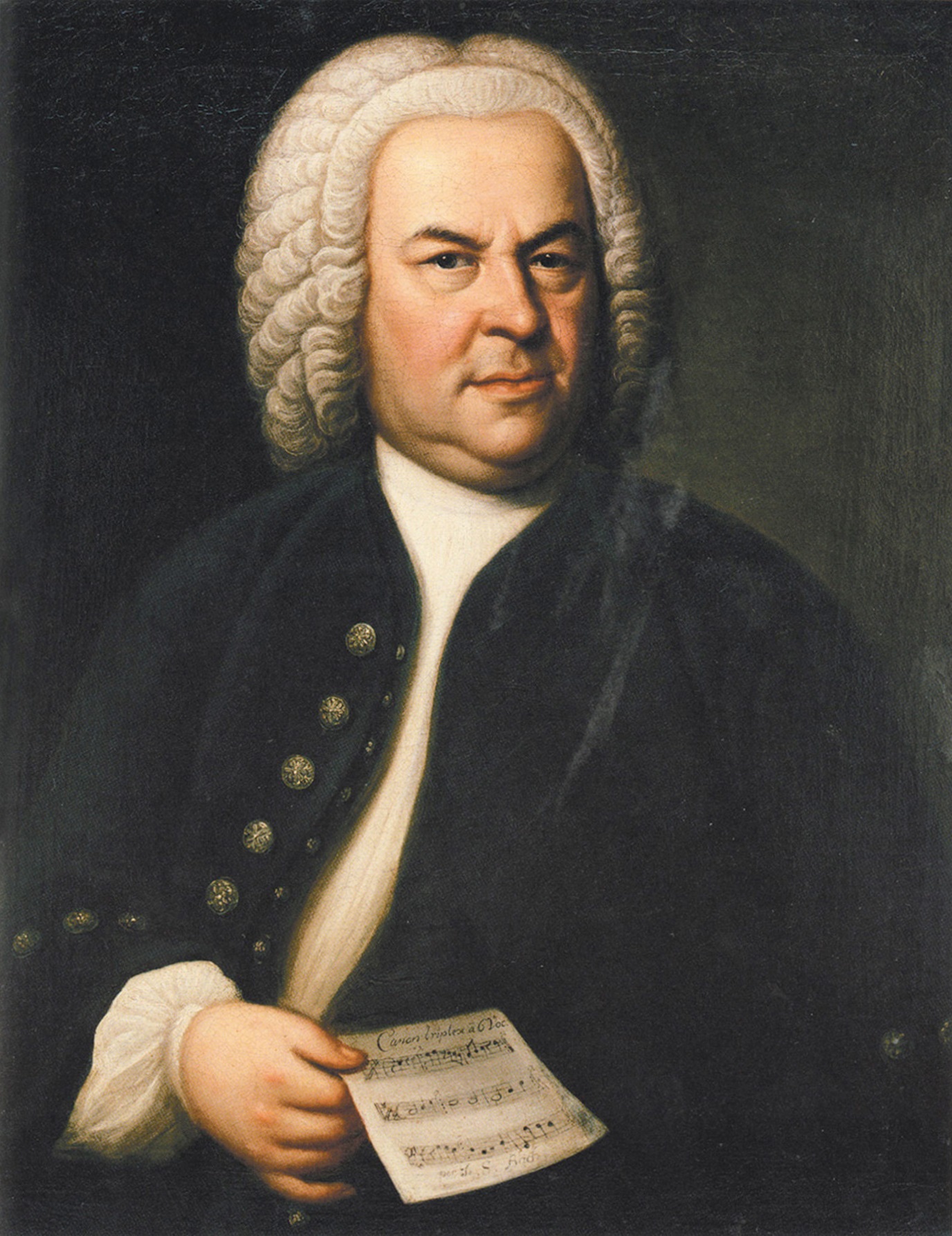
- Johann Sebastian Bach (aged 61), holding the six-part canon BWV 1076. Elias Gottlob Haussmann, 1748 (a second version of his 1746 portrait).
- George Whitefield. John Russell, about 1770, the year Whitefield died.
Week 19: 19th century: AD 1801–1900
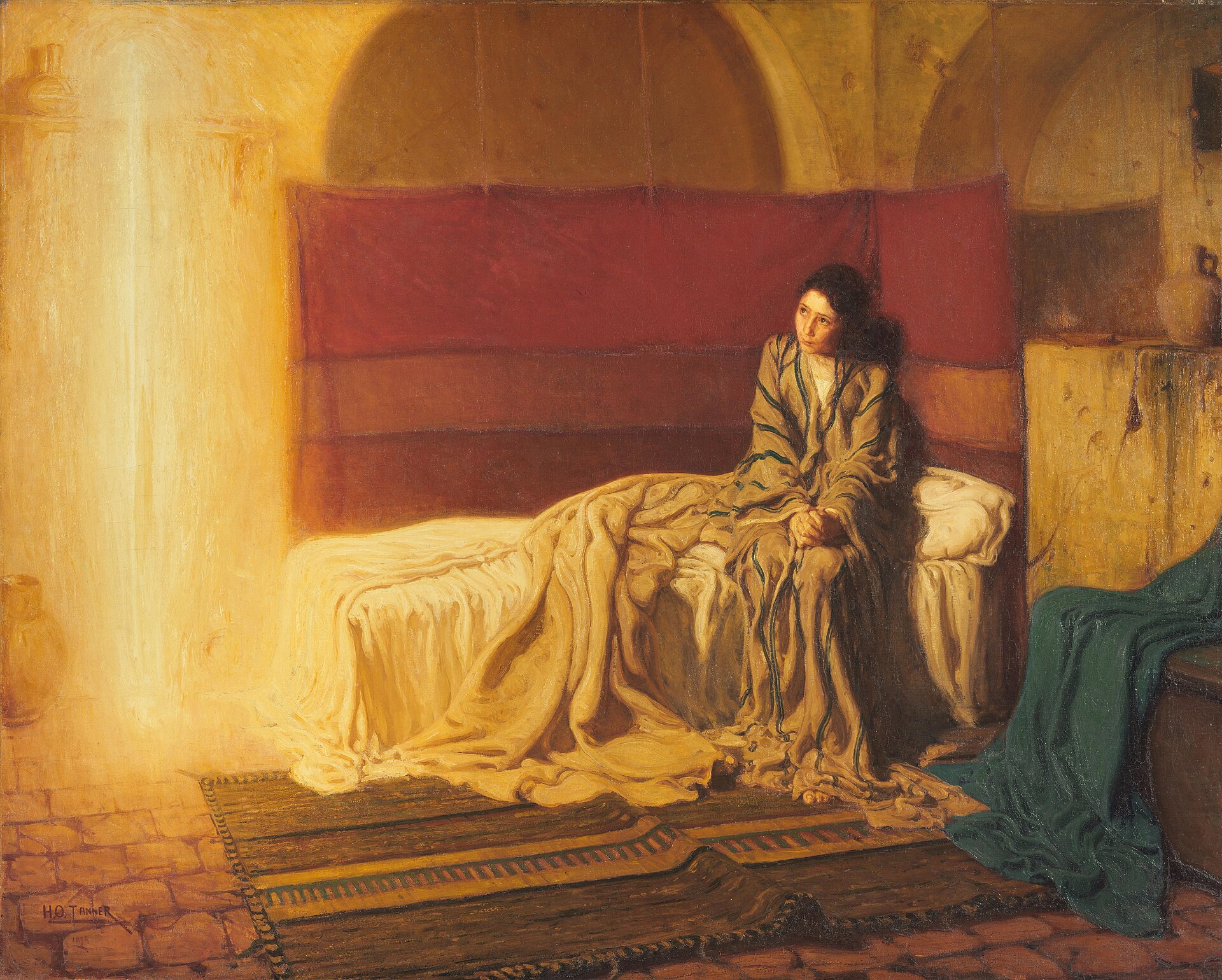
- The Annunciation. Henry Ossawa Tanner (American, active in France, 1859 to 1937), 1898.
Week 20: 20th century: AD 1901–2000
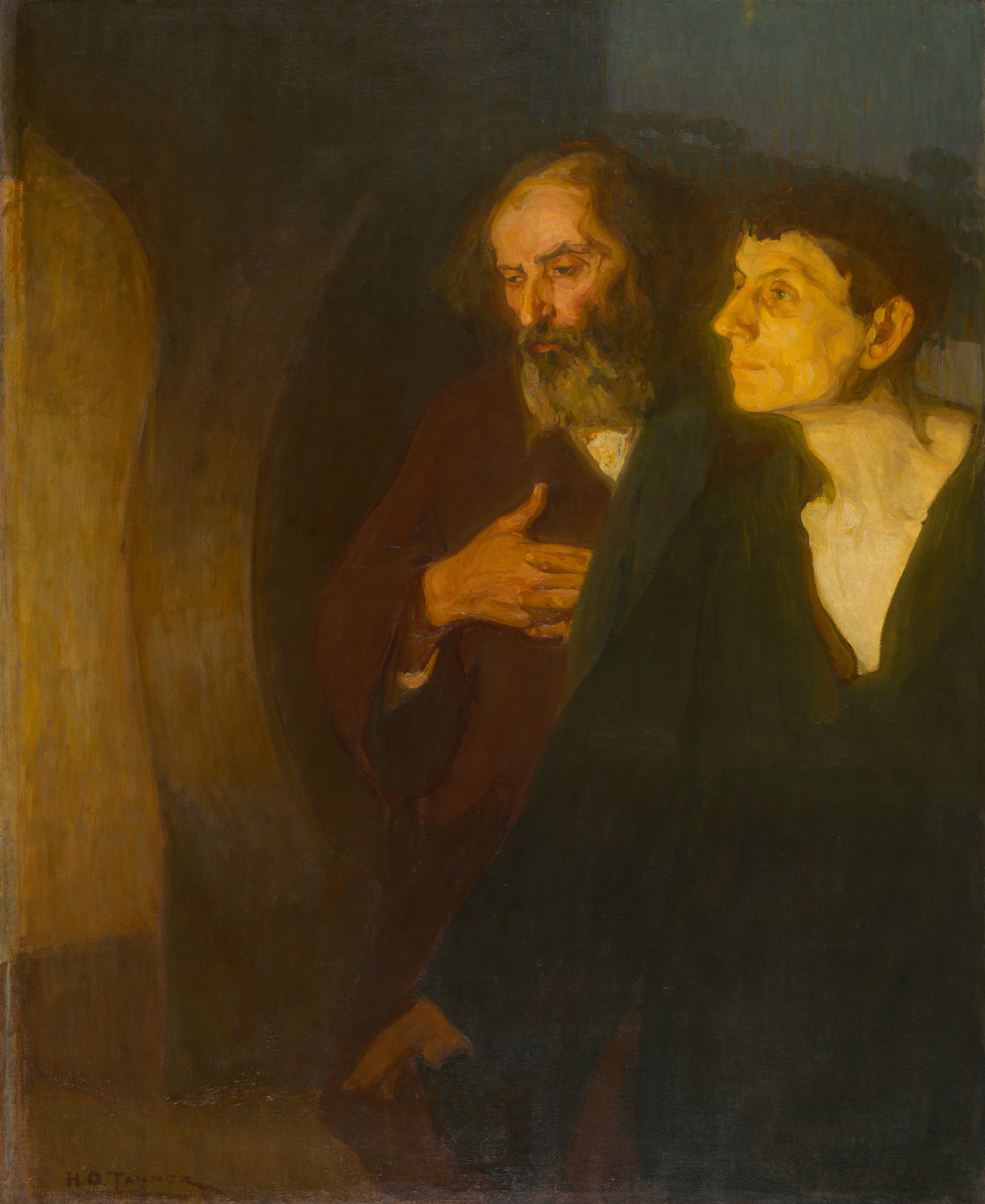
- The Two Disciples at the Tomb. Henry Ossawa Tanner (American, 1859-1937), about 1906.
Week 21: 21st century: AD 2001–October 5, 2026 (ongoing)
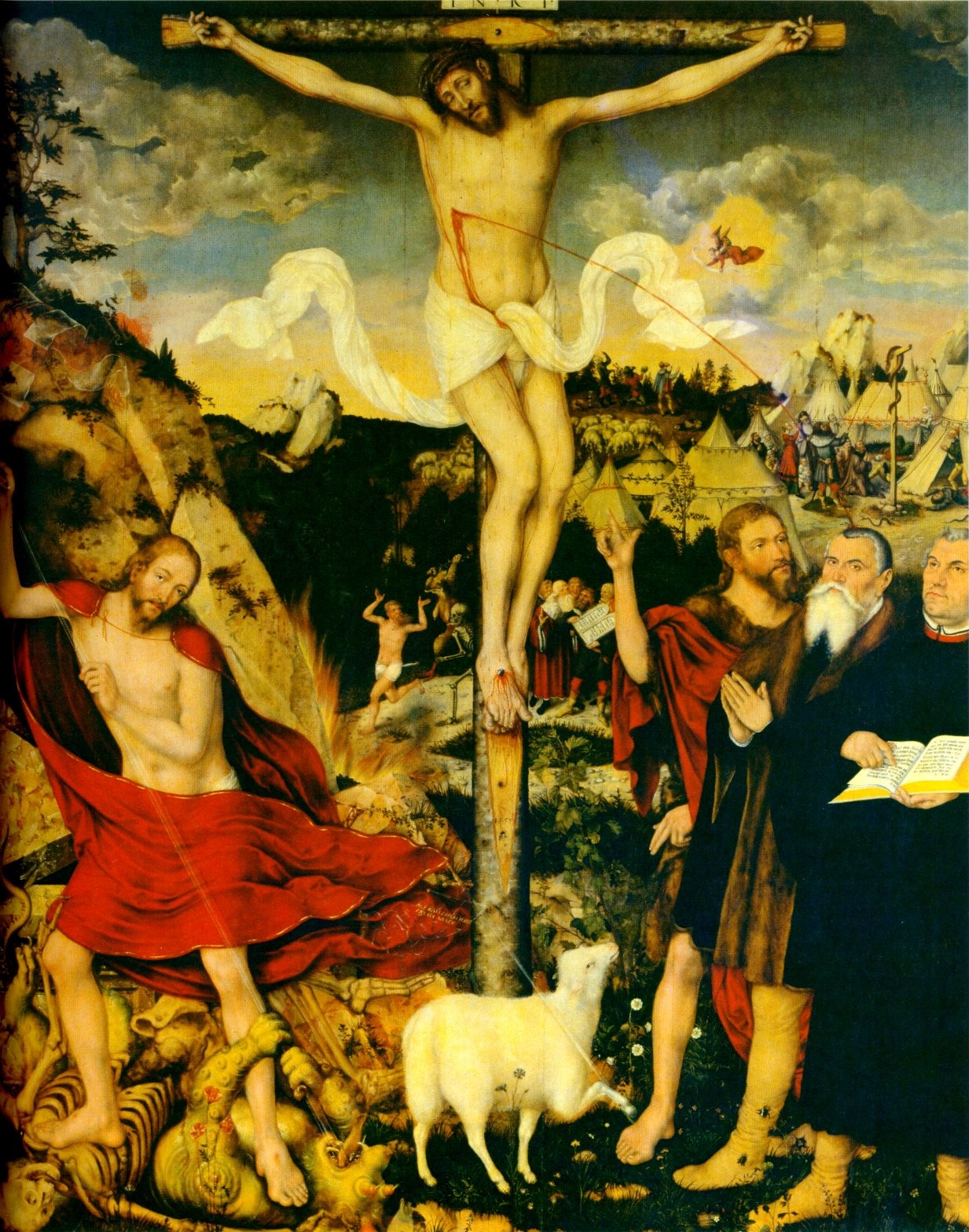
- Christ on the Cross, central panel of the Weimar Altarpiece. Lucas Cranach the Younger (long credited to his father, Lucas Cranach the Elder, who died in 1553), about 1555.
- Baptism (Philipp Melanchthon baptizes an infant), left wing of the Wittenberg Altarpiece. Lucas Cranach the Elder and Lucas Cranach the Younger, with their workshop, 1547–1548.