Week 7 · 7th century: AD 601–700
Artwork
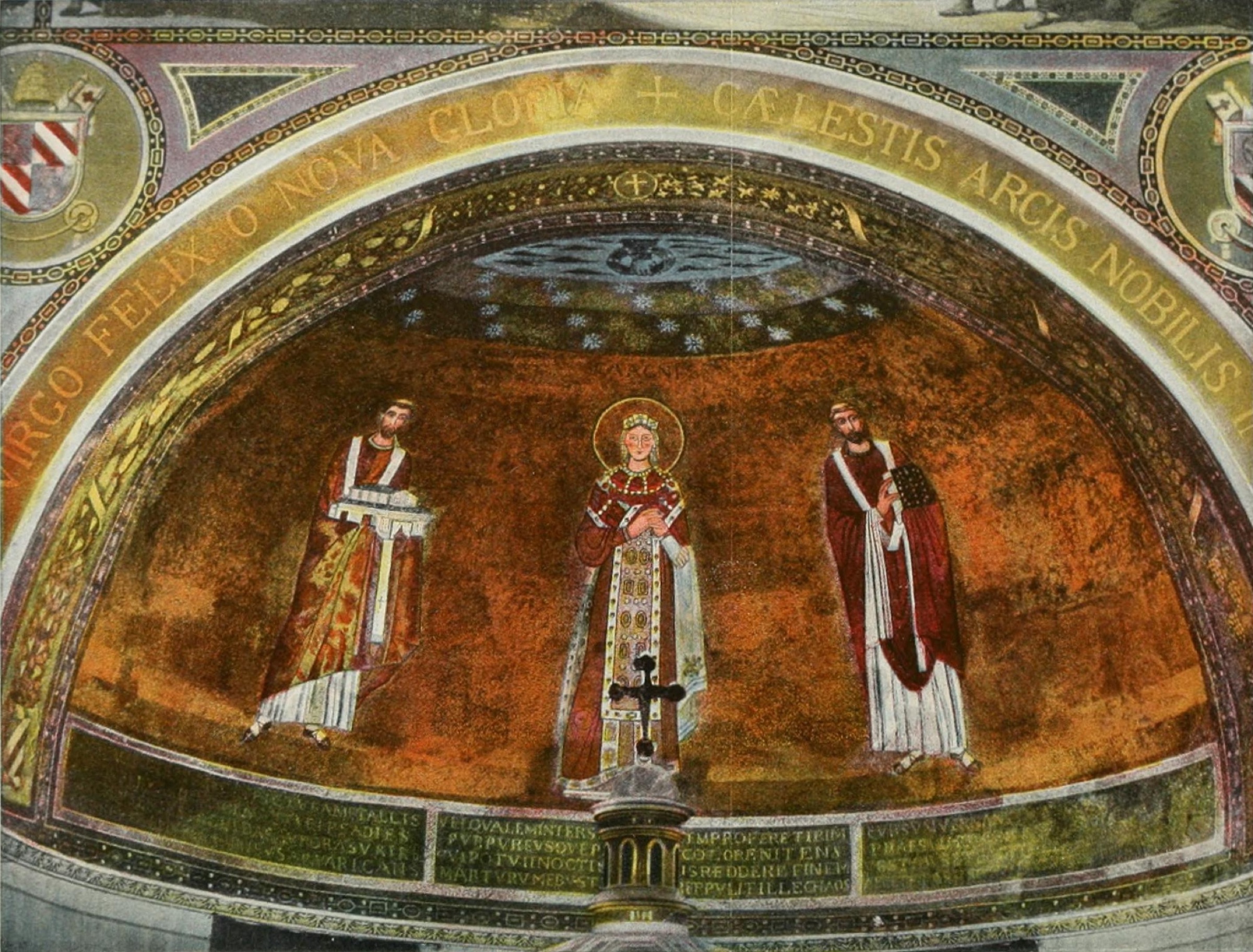
- Title: Apse mosaic of Sant’Agnese fuori le mura (Saint Agnes with Pope Honorius I)
- Artist: Unknown
- Date made: about 625–638, during the papacy of Honorius I
- Medium: Mosaic of glass and stone pieces on a gold ground
- Current location: Church of Sant’Agnese fuori le mura, Rome
- Image: color plate from the Catholic Encyclopedia, 1913
- Source page
- License: public domain, per the file page

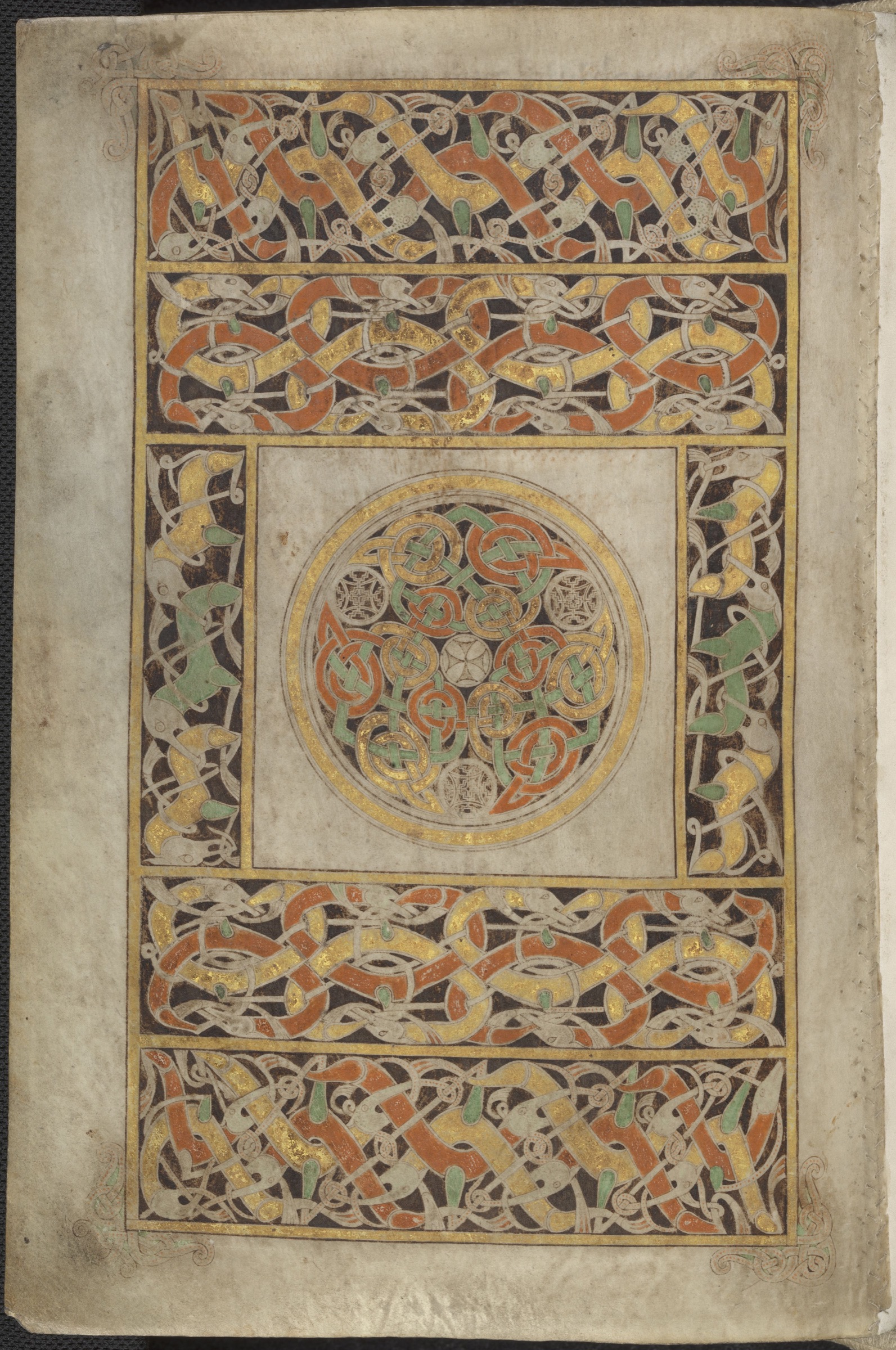
- Title: Book of Durrow, folio 192 verso, cross carpet page
- Artist: Unknown Irish scribe and artist
- Date made: about 650–700 (scholars give different dates within the seventh century)
- Medium: Ink and pigments on vellum (calf skin)
- Current location: Trinity College Library, Dublin, MS 57
- Source page
- License: public domain, per the file page

What you see
The first picture is a church apse (the half-dome behind an altar) covered in gold-brown mosaic. Saint Agnes stands in the middle, dressed like a Byzantine empress, with a halo. Pope Honorius I stands on the left and holds a model of her church. A second pope, whose name is uncertain, stands on the right and holds a book. The second picture is a full page from a Gospel book. A circle of knotted ribbons with a small cross at its center sits inside a frame of twisting animals in red, yellow and green.
Why it matters
Pope Honorius I rebuilt Sant’Agnese, and the mosaic is his portrait. Few mosaics of this age survive with so little repair. It shows how Rome in the 600s kept the Byzantine style. The church later faced a bitter irony. In 681, the sixth ecumenical council condemned Honorius by name for his letters on Christ’s will. The Book of Durrow is the oldest complete decorated Gospel book from Ireland and Britain. It was probably made at or near Durrow Abbey in Ireland. Its carpet pages, with no human figures, helped begin the Insular style (the art of Irish and English monasteries). It comes from the same Irish monastic world as the monks who argued for the Irish Easter date at Whitby in 664.
Christ and the sacraments
Both works frame the Gospel. The Roman mosaic stands behind the altar, where the Lord’s Supper is given, and it surrounds a martyr who died confessing Christ. The Durrow page opens a book of the four Gospels, and its center holds a cross. The cross points to Christ’s death for sinners. Baptism and the Supper rest on that death and on his words in those Gospels.
Teaching question
How does a picture of saints and popes differ from the words of Christ that give us Baptism and the Supper? Read Augsburg Confession III and the Small Catechism on Baptism and the Sacrament of the Altar. An image does not set doctrine. Use these texts to test what the picture teaches.
Sources
- Medieval Mosaics, Rome, S. Agnese: the 7th-century apse mosaic, Honorius I (625–38) restoring the church, and Honorius offering her the church model.
- Walks in Rome, Mosaics in Sant’Agnese fuori le Mura: Agnes between two popes, the model, the book, and the common identification of the second pope as Symmachus.
- Catholic Encyclopedia, Pope Honorius I: Honorius (625–638), his portrait in the apse mosaic, and his condemnation by the sixth council.
- Facsimiles.com, Book of Durrow: the oldest complete Insular Gospel book, dated about 650–700, with six carpet pages and its probable Irish origin at or near Durrow.
- University of Edinburgh Collections, Book of Durrow, MS 57: dated 650–699, the earliest surviving fully illuminated Insular Gospel book, with six carpet pages.
- Trinity College Dublin Library, Book of Durrow: MS 57, dated about 650–700.
- University of Otago Library, Book of Durrow: a date of about 675, its decoration, and its current home at Trinity College, Dublin.