Week 8 · 8th century: AD 701–800
Artwork
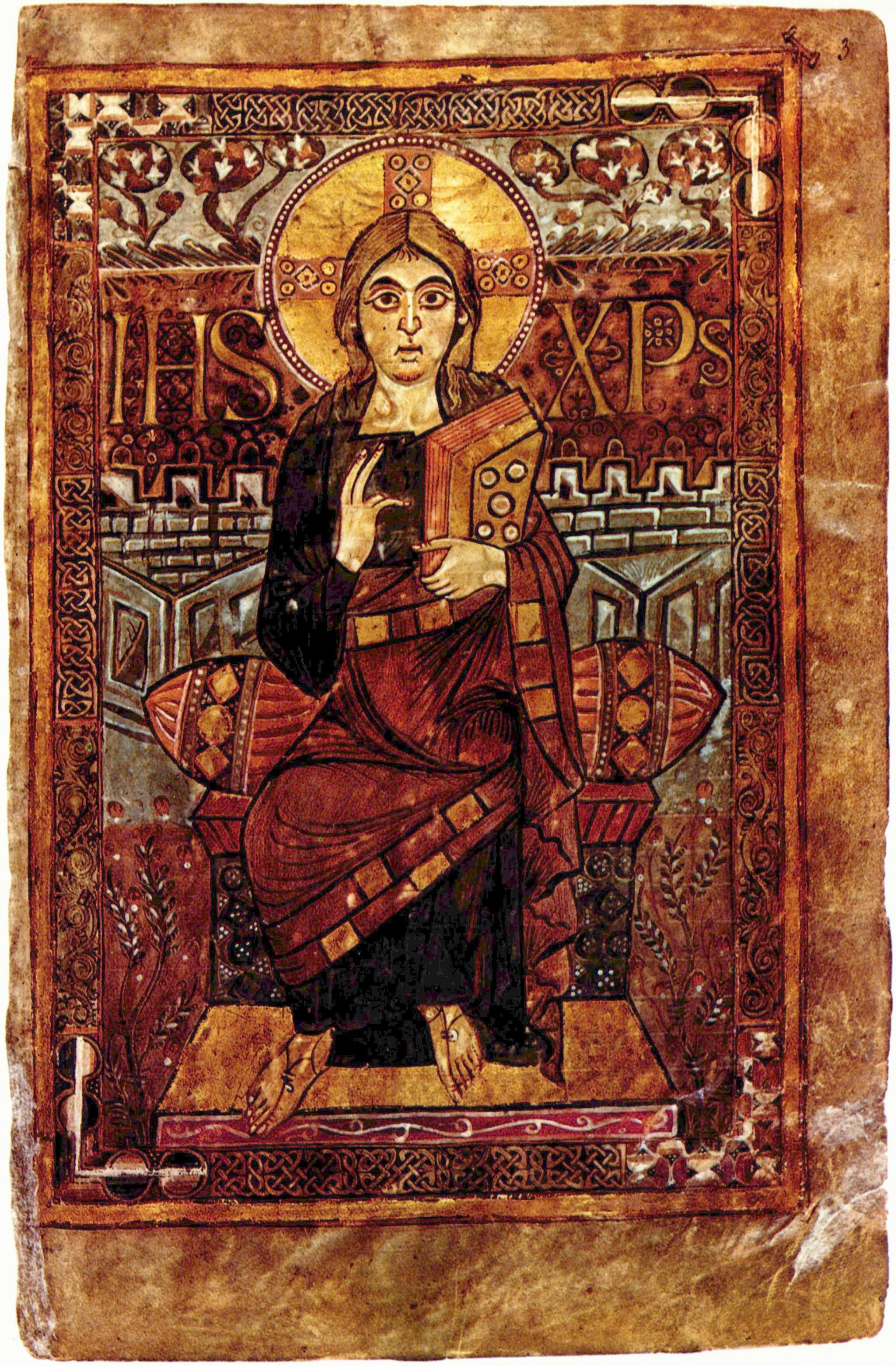
- Title: Christ in Majesty, from the Godescalc Evangelistary (folio 3r)
- Artist: Unknown illuminator of Charlemagne’s court school. Godescalc wrote the manuscript.
- Date made: 781–783
- Medium: Paint and gold on parchment
- Location: Bibliothèque nationale de France, Paris (NAL 1203)
- Source page
- License: public domain


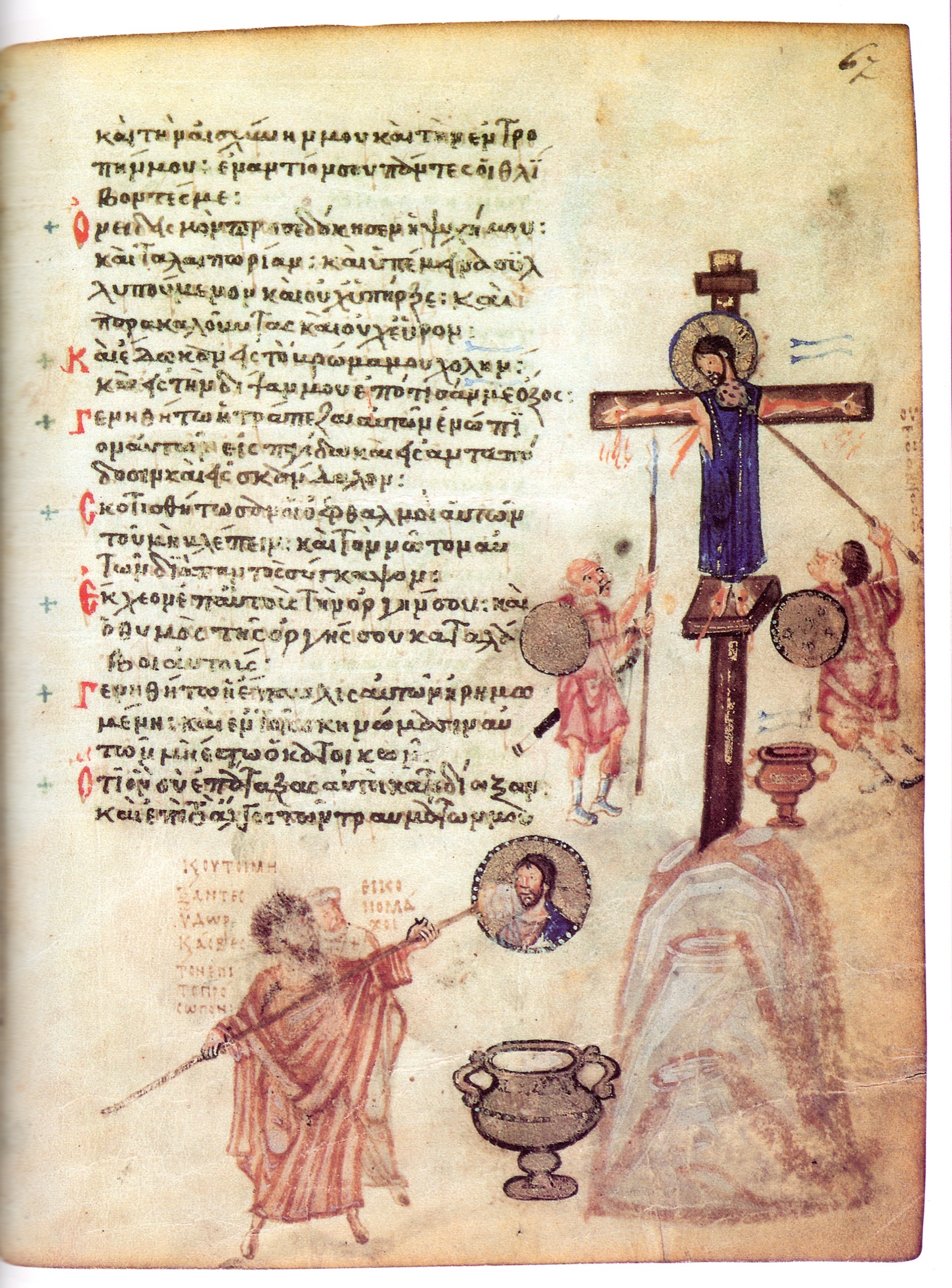
- Title: Crucifixion and the iconoclast whitewashing an icon of Christ, Chludov (Khludov) Psalter, folio 67r
- Artist: Unknown Byzantine illuminator
- Date made: about 850–875. This is after the century. It shows a dispute that began in the 700s.
- Medium: Paint and gold on parchment
- Location: State Historical Museum, Moscow (MS D.129)
- Source page
- License: public domain


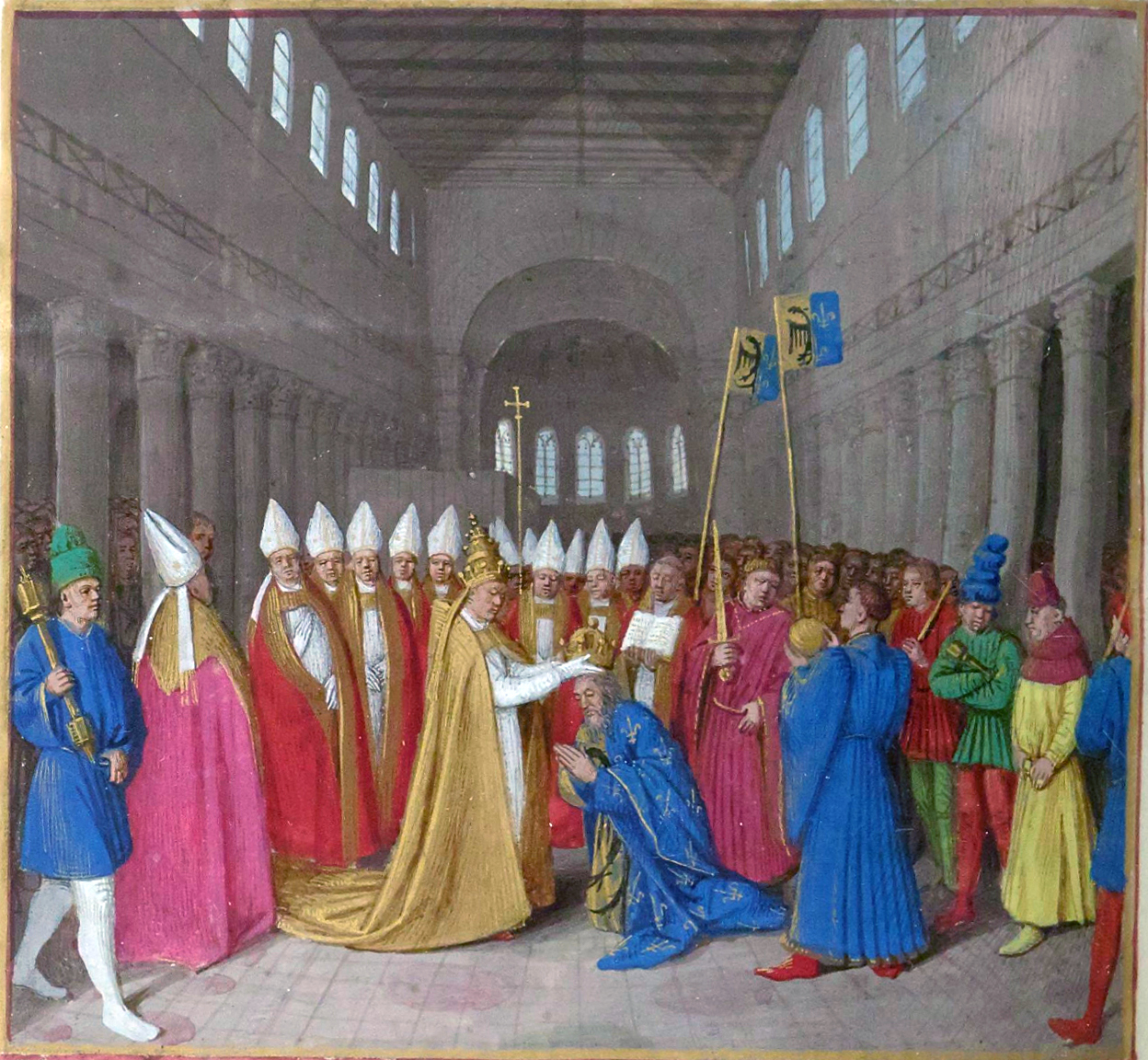
- Title: The coronation of Charlemagne, from the Grandes Chroniques de France (folio 89v)
- Artist: Jean Fouquet
- Date made: about 1455–1460. This is 650 years after the event of 800.
- Medium: Paint and gold on parchment
- Location: Bibliothèque nationale de France, Paris (Français 6465)
- Source page
- License: public domain


What you see
The first picture shows Christ seated on a throne against a gold halo, with a cross behind his head. He lifts one hand in blessing and holds a closed book. The letters IHS XPS, a short form of “Jesus Christ,” stand on each side. Rich borders frame the page. The second picture shows Christ crucified on a cross, with soldiers raising a spear and a sponge. Below, a man with wild hair wipes out a round icon of Christ with a sponge on a pole. The third picture shows a pope placing a crown on a kneeling, bearded king in a tall church, with bishops and courtiers looking on.
Why it matters
The Godescalc Gospel book was written for Charlemagne between 781 and 783. Its scribe tells us he went to Rome in 781 for the baptism of Charlemagne’s son by Pope Hadrian I. Its Christ figure shows how Frankish artists took up Byzantine and Irish styles while the East fought over images. The Chludov Psalter was made later, but it shows how the defenders of icons saw the iconoclasts. They drew them as men who attacked Christ. The page sets the wiping of his icon beside the soldier who gave him vinegar on a sponge. Fouquet painted the coronation in the 1400s in the dress of his own day. It is a late French view of the event, not an eyewitness record.
Christ and the sacraments
The first picture shows the incarnate Christ as the Gospels’ teacher and king. It stood in a book read at the church’s worship, where the Word is read and the Lord’s Supper is given. The Chludov page ties the debate about images to the sufferings of Christ in the flesh. The council of 754 said the bread and wine were the only true image of his body. The Lutheran Confessions say that Christ gives his true body and blood in the Supper by his own word. They say that Baptism is water joined to God’s Word.
Teaching question
If Christ truly became flesh, can a church picture him? What must a picture never do in place of his Word and Sacraments? Read Augsburg Confession III, Large Catechism, First Commandment, and Small Catechism: the Supper.
Sources
- University of Galway, Early Medieval Manuscripts catalogue, Godescalc Evangelistary: dates the manuscript to 781–783, names Godescalc as scribe, and records the baptism of 781.
- INHA AGORHA catalogue, Godescalc Evangeliary: dates the manuscript to 781–783 (BnF NAL 1203).
- Art and Architecture of the Middle Ages, Khludov Psalter: dates it to the mid-ninth century, gives Moscow, State Historical Museum, MS D.129, fol. 67r, and describes John the Grammarian whitewashing an icon of Christ beside the soldier with the sponge.
- Catholic Encyclopedia, Iconoclasm: gives the history of the dispute.
- Bibliothèque nationale de France, Essentiels, Couronnement impérial de Charlemagne: dates the Fouquet miniature to about 1455–1460, made in Tours, BnF Français 6465, fol. 89v.
- Schaff, History of the Christian Church IV, §57: describes the coronation of 800.