Week 19 · 19th century: AD 1801–1900
Artwork
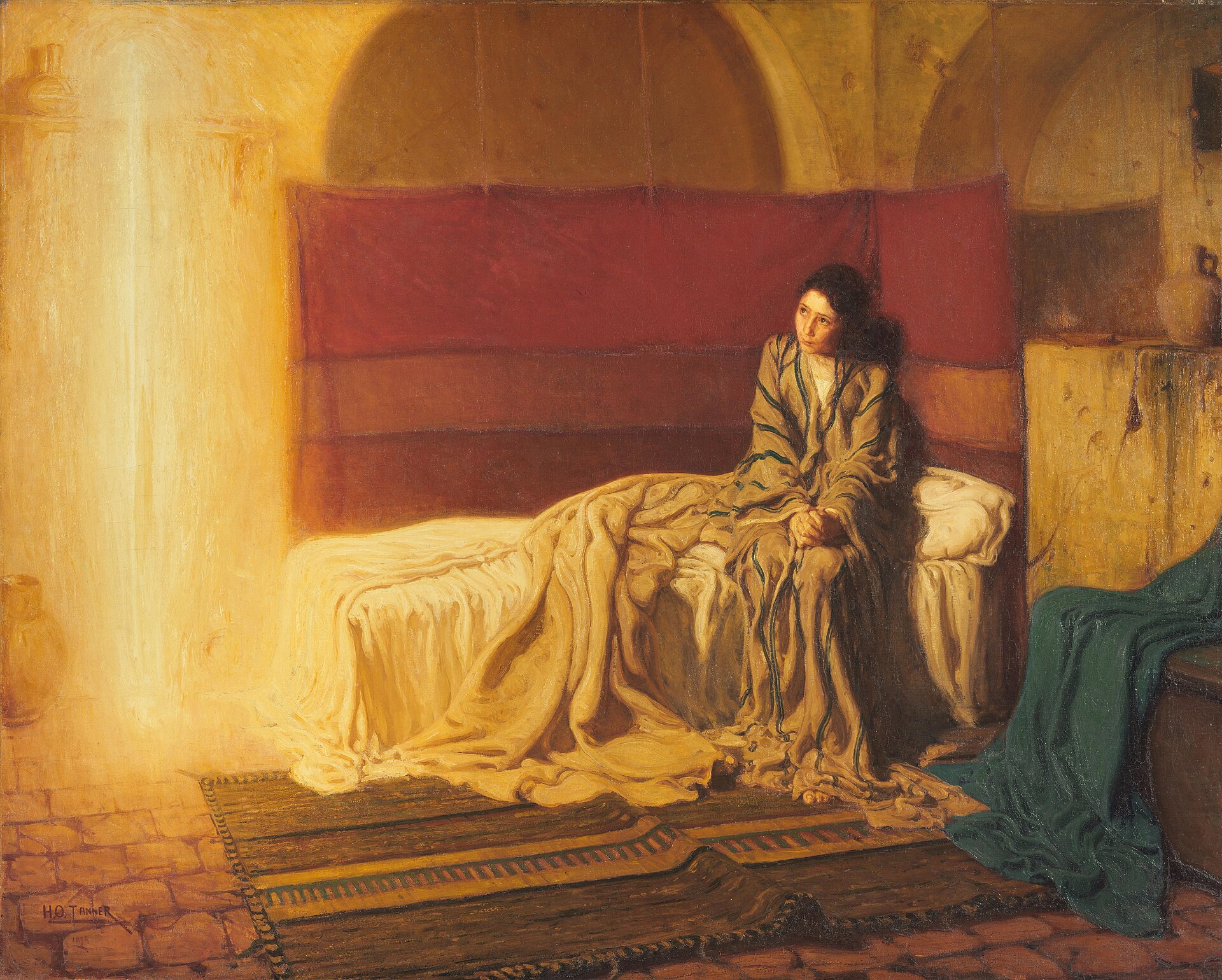
- Title: The Annunciation
- Artist: Henry Ossawa Tanner (American, active in France, 1859 to 1937)
- Date made: 1898
- Medium: oil on canvas
- Current location: Philadelphia Museum of Art, accession number W1899-1-1
- Source page: Wikimedia Commons file page
- Museum record: Philadelphia Museum of Art, object 104384
- License: Public domain, faithful reproduction of a public domain painting

What you see
A young woman sits on the edge of a rumpled bed. She wears a plain striped robe, and her hands are clasped in her lap. She looks to the left with a wary, serious face. A tall shaft of golden light fills the left side of the room. It stands in place of the angel. The room has rough plaster walls, a stone floor and woven rugs. A red wall hanging and a green cloth add color. The scene looks like a real home, not a heavenly place. Mary has no halo.
Why it matters
Tanner painted this picture in Paris after a trip to Egypt and Palestine in 1897. He wanted to see the land, the light and the buildings of the Bible. He was the son of a minister in the African Methodist Episcopal Church. He sent the work to the 1898 Paris Salon, a major yearly art show. The Philadelphia Museum of Art bought it in 1899. It was Tanner’s first work to enter an American museum. The museum calls the image unconventional. Tanner showed Mary as a teenager in rumpled peasant clothes, with no halo. He showed Gabriel only as light. That choice makes the event feel close and human.
Christ and the sacraments
The picture shows Gabriel telling Mary that she will bear the Son of God. The Son takes a real human body in a real room. That is the center of Christian teaching about Christ. Lutherans also hold that this same body and blood is given with the bread and wine of the Lord’s Supper. The picture is not a doctrine. It only points the viewer to the incarnation.
Teaching question
How does the incarnation, God’s Son becoming human, support what Christians receive in Baptism and the Supper? Read Augsburg Confession III, Small Catechism, Baptism, and Small Catechism, the Sacrament of the Altar. A painting does not set doctrine. Use these texts to test what the picture suggests.
Sources
- Philadelphia Museum of Art, “The Annunciation,” object record 104384: artist, date, trip, Salon and purchase.
- Wikimedia Commons file page: date, medium and license.
- Smithsonian American Art Museum, Henry Ossawa Tanner: his training at the Pennsylvania Academy, his move to Paris in 1891, his international reputation as a painter of religious subjects, his father as an African Methodist Episcopal minister and later bishop, and his trips to the Holy Land.