Week 14 · 14th century: AD 1301–1400
Artwork
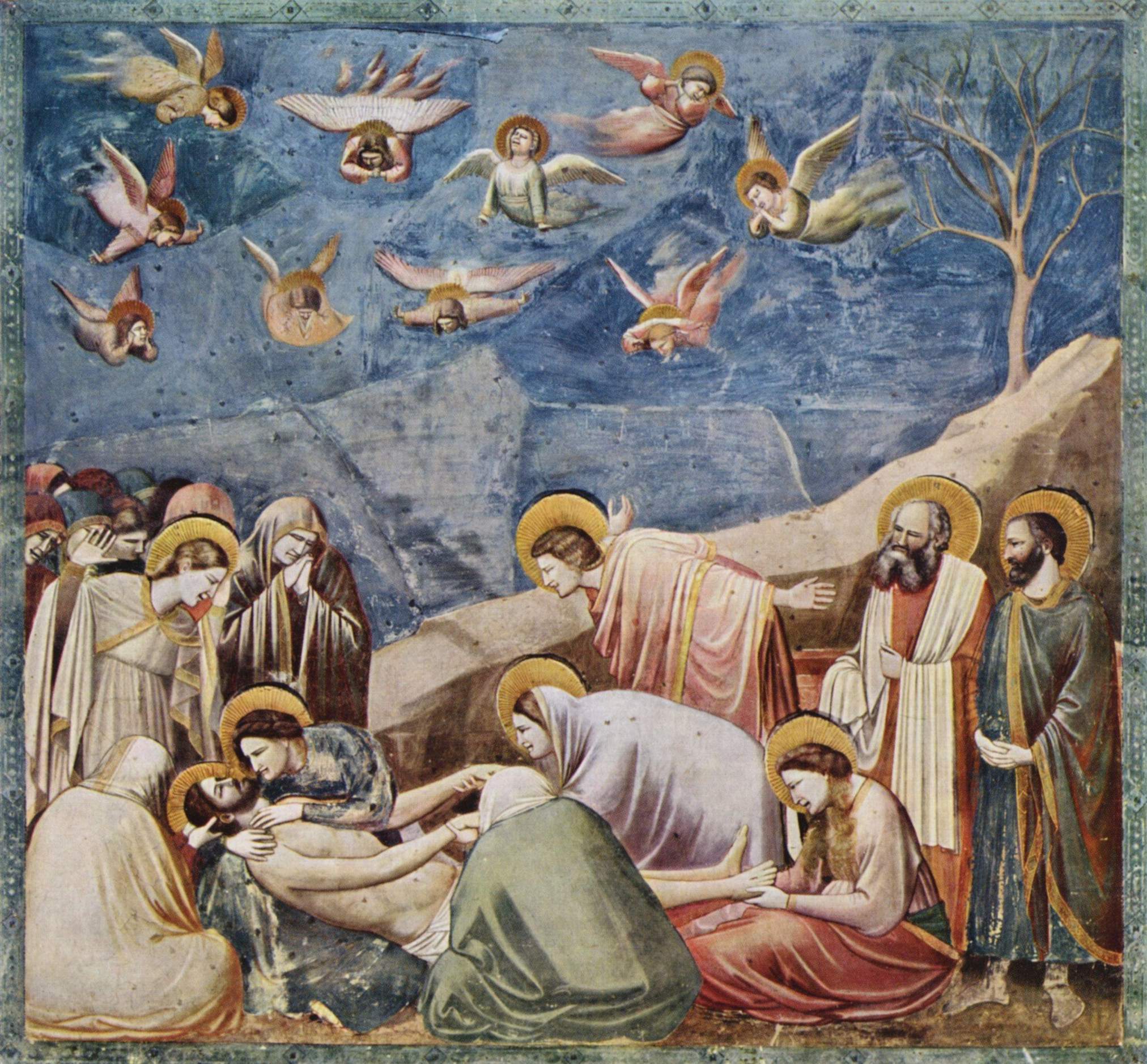
- Title: Lamentation (The Mourning of Christ)
- Artist: Giotto di Bondone
- Date made: about 1304–1306, during this century
- Medium: Fresco (paint on wet plaster)
- Current location: Scrovegni (Arena) Chapel, Padua, Italy
- Source page: Wikimedia Commons, Giotto di Bondone 009.jpg
- License: Public domain. The artwork is over 100 years old, and the file is a faithful photograph (PD-Art)

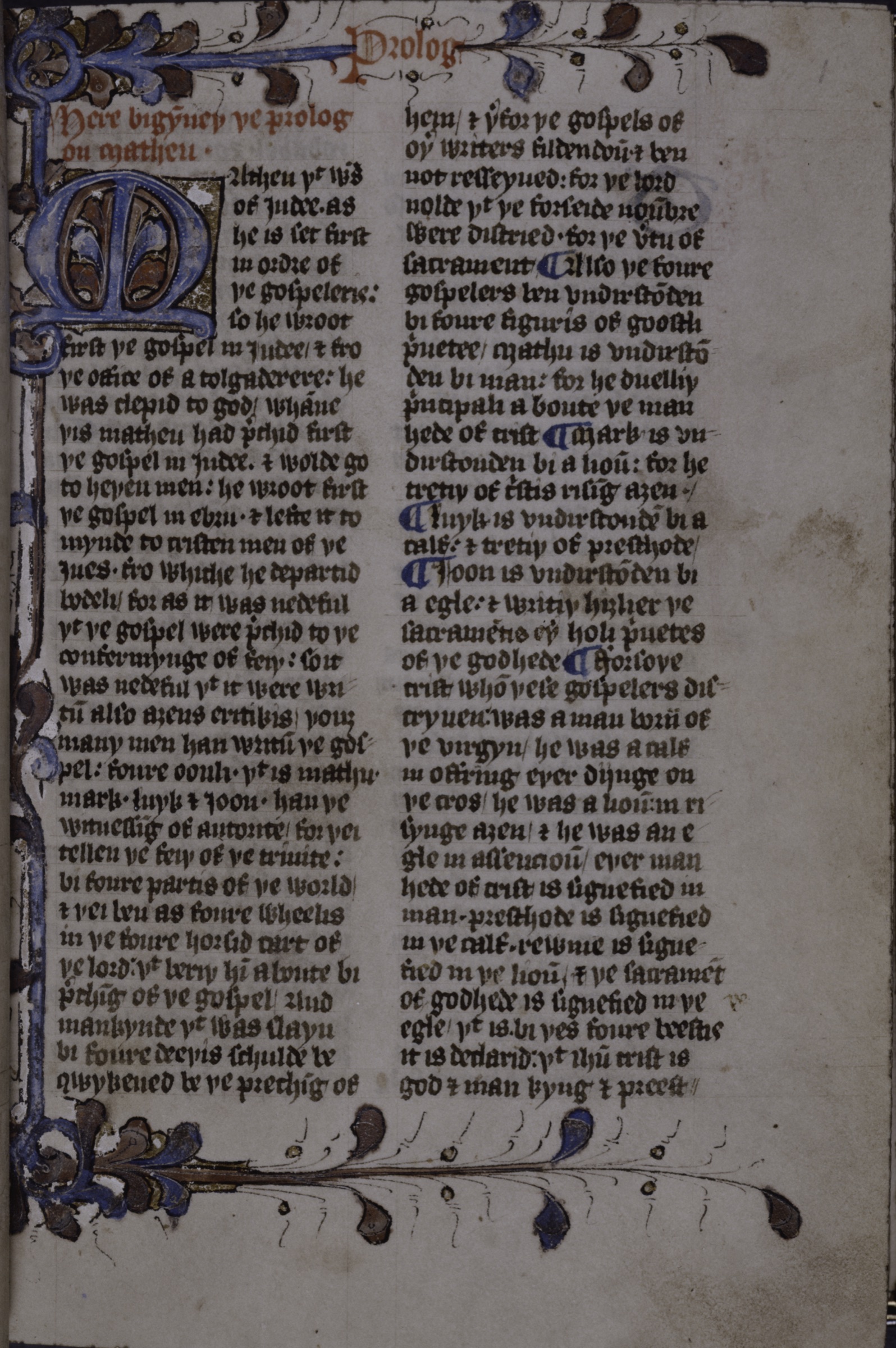
- Title: Wycliffite English New Testament (later version), opening of the main text with the prologue to Matthew
- Artist: Unknown scribe
- Date made: Early fifteenth century, about 1430 by one scholar’s dating. The translation itself comes from the late fourteenth century
- Medium: Handwritten manuscript page on parchment, with a gold and blue initial and penwork
- Current location: New York Public Library, Manuscripts and Archives Division (Lenox collection)
- Source page: Wikimedia Commons, NYPL scan b12455533-426123 (cropped from a 3598 by 4464 pixel scan)
- License: Public domain (PD-old-auto-1923)
What you see
In the first picture, the dead Christ lies at the lower left. His mother Mary holds his head and looks into his face. Mary Magdalene sits at his feet and holds them. Other mourners crowd the left edge, and two men stand quietly at the right. Disciple John leans forward with his arms flung out. Above, angels wheel across a deep blue sky, weeping and covering their faces. A rocky ridge slopes down toward Christ’s head and leads the eye to him. In the second picture, a page of black English letters stands in two columns. A large blue initial M on a gold ground opens the prologue to Matthew, and blue and brown leaf-shaped flourishes run through the margins.
Why it matters
Giotto painted this scene for the Scrovegni Chapel in Padua, which was finished about 1305. Earlier painters often made holy figures stiff and flat. Giotto gave them weight, space, and real grief. Many art historians see this as a turning point toward the Renaissance. The Gospels do not describe this mourning scene, so it comes from later devotion. The Wycliffite page shows a very different art. It is a hand-copied English New Testament. Wyclif’s followers made English Bibles so lay people read Scripture for themselves. This copy is a later version of their translation, made in the early fifteenth century. Together, the two images show how fourteenth-century Christians met Christ: through pictures in church and through the Bible in their own language.
Christ and the sacraments
Giotto’s Lamentation puts Christ’s real human body at the center. He is a true man who truly died, and Mary and the others handle and kiss that body. This is the same body and blood that the Lord’s Supper gives. The Wycliffite page opens the Gospel of Matthew, which ends with Christ’s command to baptize (Matthew 28:19). Baptism and the Supper deliver the Christ whom both pictures proclaim.
Teaching question
What does Giotto’s fresco teach about Christ’s person? Compare it with the confession in Augsburg Confession III that Christ is true God and true man.
Sources
- The Scrovegni Chapel, official site (Musei Civici di Padova): The chapel was frescoed by Giotto between 1303 and 1305 and is dedicated to St. Mary of the Charity.
- The Art Post Blog, 5 things to know about Scrovegni Chapel: Giotto painted the chapel between 1303 and 1305.
- Heidi J. Hornik, “Mary and the Women from Galilee,” Christian Reflection (Baylor University): Dates the Lamentation to 1305–1306. It describes the three Marys around Christ’s body and says the scene is not told in the Gospels.
- Glasgow University Library, Chaucer exhibition: Wycliffite Bible, MS Hunter 191: Describes a plain, pocket-sized English Gospel volume from the late fourteenth century. Wyclif’s followers made many small copies like it for traveling preachers.
- British Library, Egerton MS 618: Records an early English Bible made by Wyclif’s followers for Thomas of Woodstock. He died in 1397. It is the earliest datable complete copy.
- Wikimedia Commons, NYPL scan of the opening of the main text: gives the catalog notes for this manuscript. It is a later-version Wycliffite New Testament, dated to the 15th century and about 1430 by Paul Acker, in 35-line double columns on parchment.
- Bridwell Library, Wycliffite English Bible: Calls it the first widely used English Bible and says it was translated from Latin by his anonymous followers.