Week 13 · Medieval
13th centuryAD 1201–1300
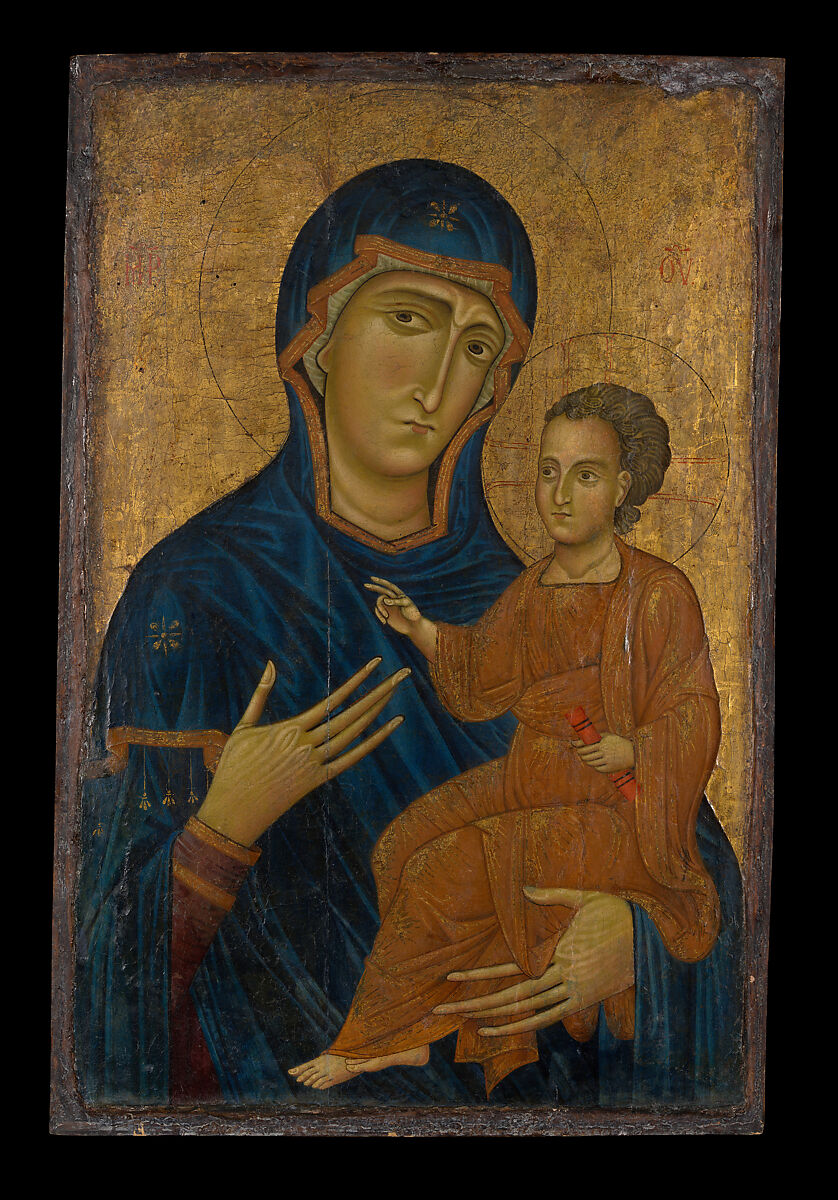 About this artwork →
Church life
- In 1215 the Fourth Lateran Council (the church’s large Western council in Rome) told every Christian who had reached the age of discernment to confess sins to a priest once a year. It also told them to receive Communion (the Lord’s Supper) at least at Easter. A priest can advise a person to hold back for a time. This links to the Lord’s Supper because the rule shaped how medieval Christians came to the Sacrament. P: Canon 21 V1: Rebecca Springer, Confession in England and the Fourth Lateran Council, summary V2: Britannica, Lateran Councils, fourth council.
- Pope Innocent III (pope 1198 to 1216) was the strongest pope of the century. He called the Fourth Lateran Council in 1213 and died in 1216, a few months after it met. P: Lateran IV, introduction and constitutions V1: Catholic Encyclopedia, Innocent III V2: Schaff V, §§41–42.
- In 1223 Pope Honorius III approved the Rule (written way of life) of Francis of Assisi’s Friars Minor. The Rule told the friars to live in obedience, without personal property, and in chastity. P: Rule, chapter I V1: Catholic Encyclopedia, Francis, approved rule V2: Schaff V, §70.
- On 22 December 1216 Honorius III confirmed Dominic’s community as an order devoted to preaching. The Dominicans (the Order of Preachers) trained preachers to teach the faith, and Dominic had first preached against the Cathars (see Controversy and heresy). P: Bulls of approval, Religious life V1: Britannica, Dominic, Saint V2: Britannica, Dominicans.
- In 1215 the papal legate Robert de Courçon issued rules for the University of Paris. They set the course of study for arts students and rules for theology teachers. Universities now stood beside cathedral schools and monasteries as centers of Christian learning. P: Courçon, Statutes for the University of Paris V1: Schaff, History of the Christian Church V, on the University of Paris and the 1215 statutes V2: Catholic Encyclopedia, Robert of Courçon.
- William of Rubruck, a Franciscan friar, met Christians, Muslims, and Buddhists in the Mongol world. His account shows that Christianity reached far beyond western Europe. P: Journey, Karakorum and religious debate sections V1: Encyclopaedia Iranica, Rubruck, religious encounters V2: Claire Taylor, §§3.2–3.3 and conclusion.
Controversy and heresy
- The Fourth Lateran Council’s first constitution taught that the bread and wine are changed in substance into Christ’s body and blood. This teaching is called transubstantiation (the claim that the underlying reality of the bread and wine changes while their look and taste stay). It ties the Lord’s Supper to the question of how Christ is present. P: Constitution 1 V1: Catholic Encyclopedia, Lateran IV, canon 1 V2: Schaff V, §§41 and 115.
- Thomas Aquinas taught that Christ’s body and blood are truly present in the Supper and that the substance of the bread does not remain. P: Summa theologiae III, question 75, articles 1–2 V1: Schaff V, §115, Thomas’s account of the change V2: Catholic Encyclopedia, Real Presence, Thomas and the Eucharistic accidents.
- The Cathars (also called Albigensians, after the town of Albi in southern France) taught that the physical world is evil. They said Christ’s body was only apparent, so he did not truly suffer. This is Docetism (the claim that Christ only seemed to have a body). Lateran IV answered by confessing that Christ became “true man.” It also ordered the civil authorities to punish condemned heretics. Their goods were to be taken. P: Lateran IV, constitutions 1 and 3 V1: Catholic Encyclopedia, Albigenses V2: Britannica, Albigenses.
- In 1209 Innocent III’s call led to the Albigensian Crusade, a war against the Cathars in southern France. Béziers and Carcassonne fell that year. The war ended politically with the Treaty of Paris in 1229. The Council of Toulouse the same year gave the Inquisition (church courts to find heretics) its work in the region. V1: Catholic Encyclopedia, Albigenses V2: Britannica, Albigenses P: Lateran IV, constitution 3 on heretics.
Councils and major events
- Lateran IV, 1215: More than 400 bishops met in Rome. The council confessed the Trinity, Christ as true God and true man, the real presence of Christ’s body and blood, and the yearly confession rule. It also set severe measures against heretics. When you discuss it, keep the doctrine and the force used against heretics apart. Christology and the sacraments are central to its first constitution. P: Constitutions 1, 3, and 21 V1: Catholic Encyclopedia, Lateran IV, canons 1, 3, and 21 V2: Schaff V, §41.
- Lutheran classification: Mixed. The Lutheran Confessions accept its confession of the Trinity and of Christ’s two natures. They accept that Christ’s body and blood are truly present in the Supper. They reject transubstantiation as a required teaching. They also reject the demand to list every sin in confession, and the claim that the Roman church rules over all. Smalcald Articles III VI, Solid Declaration VII 108, Augsburg Confession XXV.
- Lyons I, 1245: Innocent IV declared Emperor Frederick II deprived of his throne and freed his subjects from their oaths. The council also dealt with the Mongol threat and the Holy Land. P: Bull of deposition V1: Catholic Encyclopedia, Lyons I V2: Schaff V, §44. It ties to the sacraments only loosely, through the pope’s claim to rule the church and the empire.
- Lutheran classification: Not classified. Lyons I made no doctrinal decision. It settled a dispute over power between pope and emperor. The Lutheran Confessions do reject the claim that a bishop can take away a ruler’s throne. Augsburg Confession XXVIII, Treatise on the Power and Primacy of the Pope.
- Lyons II, 1274: The council taught that the Holy Spirit proceeds from the Father and the Son as from one source. This is the Filioque (Latin for “and from the Son”) clause. It bears on Christology because it speaks of how the Son and the Spirit relate. P: Constitution 1 V1: Catholic Encyclopedia, Filioque, dogmatic declarations at Lyons V2: Schaff V, §46, Greek delegates’ profession.
- Lutheran classification: Mixed. The Lutheran Confessions print the Nicene Creed with “and the Son,” so they accept the Filioque. They reject the papal primacy that the Greek delegates were made to profess at Lyons, and they reject purgatory. Nicene Creed, Smalcald Articles II IV, Smalcald Articles II II.
- Lyons II also pursued union with the Greek church. Greek envoys promised fidelity to Rome on 6 July 1274. Teach the agreement at the council and its lasting reception in the churches as two separate questions. P: Council introduction and union material V1: Catholic Encyclopedia, Lyons II, Union of the Churches V2: Schaff V, §46.
- Reception exercise: Compare the council’s declaration of union with the Eastern reception of that union. The Greek clergy rejected the agreement. Do not teach a lasting reunion only because envoys signed. P: Lyons II V1: Catholic Encyclopedia, Lyons II V2: Sagovsky, §4.1.
- Lyons II also set the rule that the cardinals stay shut in until they elect a pope. This was meant to end long gaps between popes. P: Lyons II, constitution 2 V1: Catholic Encyclopedia, Lyons II V2: Schaff V, §46.
- In April 1204 the Fourth Crusade (meant for Egypt) took and plundered Constantinople, the Christian capital of the East. This deepened the split between Latin and Greek Christians. P: Choniates, The Sack of Constantinople V1: Catholic Encyclopedia, Crusades V2: Britannica, Crusades.
Major people
- Francis of Assisi (about 1181 to 1226): He gave up his father’s wealth to live in poverty and preach. Use his Rule to study chosen poverty and obedience. Then ask whether a chosen discipline can become a required route to righteousness. P: Rule, chapters I to VI V1: Catholic Encyclopedia, Francis, approved rule V2: Schaff V, §70.
- Thomas Aquinas (about 1225 to 1274): A Dominican teacher at Paris, he used careful reasoning to explain the faith. Read his Supper questions as an example of scholastic reasoning (the method of university theologians) applied to the sacraments. P: Summa III, question 75 V1: Schaff V, §115 V2: Catholic Encyclopedia, Real Presence, Aquinas’s explanation.
- Dominic (about 1170 to 1221): Founder of the Order of Preachers. He preached in southern France against Cathar teaching that Christ had no real body. P: Bulls of approval V1: Britannica, Dominic, Saint V2: Britannica, Dominicans.
- Innocent III (pope 1198 to 1216): He called Lateran IV, ordered a new crusade to the Holy Land, and backed the war on the Cathars. P: Lateran IV, introduction V1: Catholic Encyclopedia, Innocent III V2: Schaff V, §§41–42.
- William of Rubruck traveled into Mongol lands from 1253 to 1255 and carried a letter from King Louis IX of France. P: Journey, introductory itinerary and narrative V1: Encyclopaedia Iranica, Rubruck, introductory journey paragraph V2: Claire Taylor, section 3.
- Louis IX of France (St. Louis) led the Seventh Crusade to Egypt. The Muslim forces captured him in April 1250. He was ransomed and stayed in the Holy Land until 1254. He died on a second crusade at Tunis in 1270. P: Joinville, Memoirs V1: Catholic Encyclopedia, Crusades V2: Britannica, Crusades.
Wider world
- 1206: Genghis Khan became ruler of the united Mongols. P: Secret History of the Mongols, section 202, PDF page 150 V1: Columbia University, Mongol Unity V2: 1911 Britannica, Jenghiz Khan, assembly paragraph.
- 1215: King John agreed to Magna Carta at Runnymede. It limited the king’s power under law. P: Magna Carta, concluding date and place V1: UK National Archives, King John’s orders V2: US National Archives, Magna Carta.
Confessional Lutheran connection
- Christology: The Fourth Lateran Council and the Lutheran Confessions both confess one Christ, true God and true man in one person. Ask how that one Christ is confessed in the creed and in the sacramental disputes. Cathar Docetism denied his real body, and the Confessions defend it. P: Lateran IV, constitution 1 P: Augsburg Confession III P: Solid Declaration VIII.
- Baptism: Compare baptismal grace with an account of salvation that makes monastic vows a higher route to righteousness. The Cathar “baptism of the Spirit” (the consolamentum) at the end of life also differs from Baptism with water and the Word. P: Augsburg Confession IX P: Augsburg Confession XXVII P: Large Catechism IV, Primary comparison: Francis’s Rule.
- Lord’s Supper: Distinguish the Lutheran confession of the true body and blood from transubstantiation and from the Mass as a sacrifice that earns forgiveness. The Lutheran Confessions say the bread remains bread while the body and blood are truly present. P: Augsburg Confession X P: Augsburg Confession XXIV P: Smalcald Articles III VI P: Solid Declaration VII, Primary comparison: Aquinas III.75.
- Confession: Lateran IV required a yearly list of sins. The Augsburg Confession keeps private absolution but says a full list of sins is not necessary. P: Lateran IV, constitution 21 P: Augsburg Confession XXV P: Smalcald Articles III VIII.
- Comparative reading: Ask how travel, empire, captivity, and interpretation shaped Rubruck’s descriptions. Distinguish what he saw from what he was told. P: Journey V1: Encyclopaedia Iranica V2: Claire Taylor, Production of Knowledge.