Week 2 · Early
2nd centuryAD 101–200
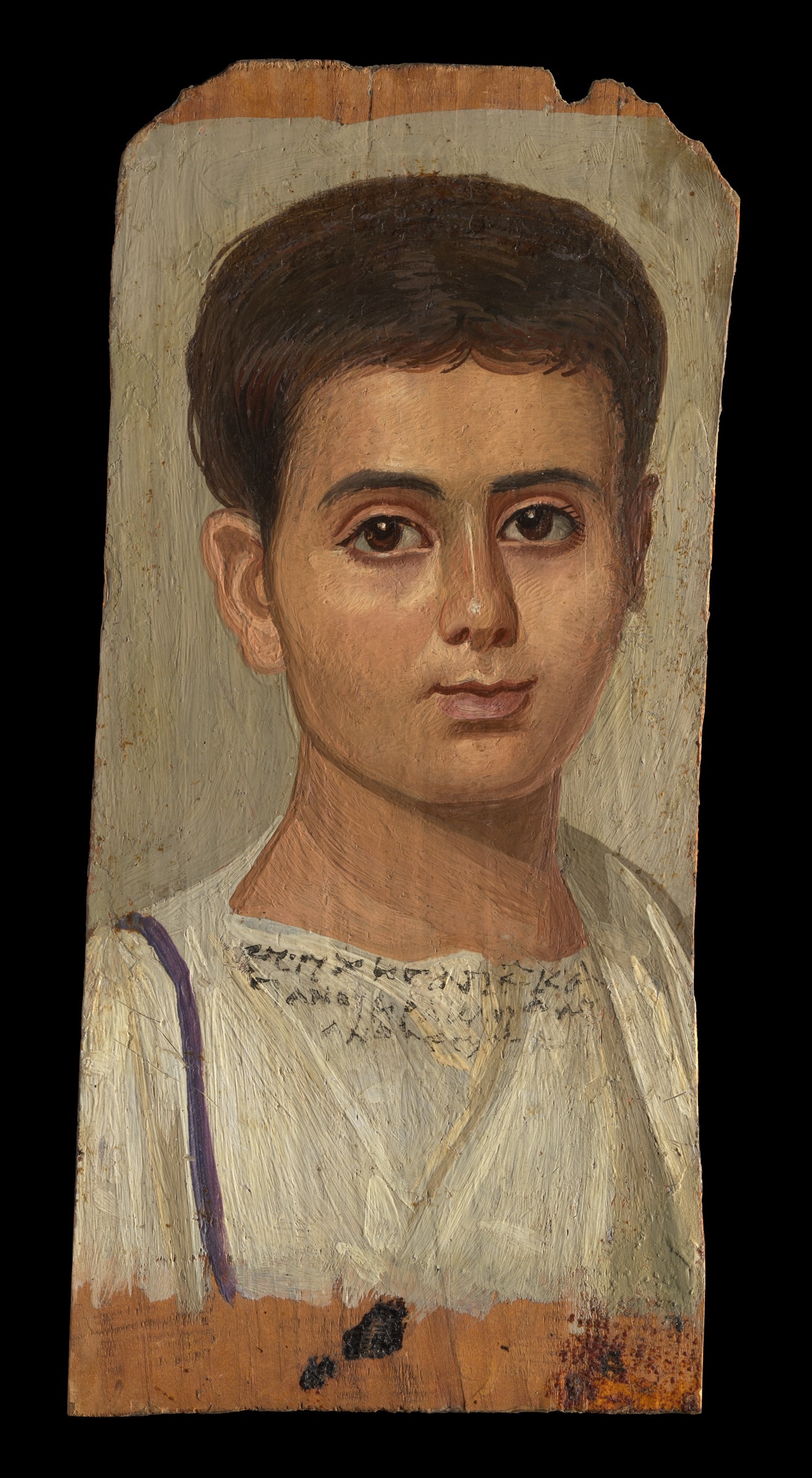 About this artwork →
Church life
- The Didache (a short church handbook, dated by scholars anywhere from the late first to the early second century) says to baptize “in the name of the Father and of the Son and of the Holy Spirit.” It prefers running water. It allows cold or warm water. If water is short, it allows pouring water on the head three times. Christ’s command in Matthew 28:19 stands behind this Baptism. P: Didache 7 V1: Catholic Encyclopedia, Didache, contents V2: Zondervan Encyclopedia, Didache, worship.
- The Didache lets only the baptized eat and drink at the Eucharist (the Lord’s Supper, from the Greek word for “thanksgiving”). Scholars still debate how its short meal prayers relate to later Communion services. P: Didache 9.5 V1: Catholic Encyclopedia, Didache, contents V2: Zondervan Encyclopedia, Didache, worship.
- About AD 150, Justin Martyr described Christian worship for the Roman emperor. Believers receive the washing of water in the name of the Father, of Jesus Christ, and of the Holy Spirit. On Sunday they gather. They hear the Gospels or the prophets read, and they pray. Then they receive bread and wine after thanks are given. Justin says this food is the flesh and blood of Jesus, who became flesh. P: Justin, First Apology 61 and 65–67 V1: Catholic Encyclopedia, Justin, contents and Eucharist V2: Adrian Fortescue, Liturgy, Origin of the liturgy, commentary on Justin’s account.
- Around AD 180, Irenaeus taught that the church has four Gospels, no more and no fewer. Matthew, Mark, Luke, and John each tell of Christ. P: Irenaeus, Against Heresies III.11.8 V1: Catholic Encyclopedia, Canon, the fourfold Gospel V2: Zondervan Encyclopedia, Canon, Irenaeus.
- The Muratorian Fragment is a damaged Latin list of the books the church reads as Scripture. Muratori published it in 1740. It is the oldest list of its kind. Scholars place it in or near Rome. Many date it about AD 170 to 190. It names the four Gospels, Acts, and thirteen letters of Paul. P: Muratorian Fragment, text and notes V1: Zondervan Encyclopedia, Muratorian Fragment V2: Catholic Encyclopedia, Canon, Muratorian Canon.
- About AD 112, Pliny the Younger asked Emperor Trajan how to treat Christians. Pliny was Roman governor of Bithynia, a province in what is now northern Turkey. Trajan said not to hunt for Christians and not to accept anonymous accusations. A person accused and proven to be a Christian was still punished. P: Pliny and Trajan letters, Letters X.96–97 V1: Catholic Encyclopedia, Trajan, Christian policy V2: Zondervan Encyclopedia, Pliny the Younger, governorship and Trajan’s reply. Eusebius, Church History III.33 gives a second ancient account of the no-search rule.
Controversy and heresy
- Docetism (the claim that Christ only seemed to have a body and to suffer) was attacked by Ignatius of Antioch. He wrote that Christ “truly suffered” and was not merely seeming to suffer. Real flesh is what makes Christ’s death a real death for sinners. P: Ignatius, Smyrnaeans 1–3 V1: Catholic Encyclopedia, Ignatius, contents of the letters V2: Encyclopaedia Britannica 1911, Ignatius.
- Gnosticism troubled the church in this century. It was a group of movements that promised saving “knowledge” (gnosis) and often taught that the material world was evil. Irenaeus of Lyons wrote Against Heresies to answer it. He named the followers of Valentinus, a Gnostic teacher, and said they wrongly shut the flesh out of salvation. P: Irenaeus, Against Heresies V.1.2 V1: Catholic Encyclopedia, Irenaeus, writings V2: Benedict XVI, Irenaeus, 28 March 2007. Teaching prompt: read Against Heresies V.2.1–3. Ask how Irenaeus connects the Creator, Christ’s coming in the flesh, and the Eucharist. For background on Gnostic ideas, see Zondervan Encyclopedia, Gnosticism.
- Marcion of Pontus came to Rome about AD 139. He taught that the God of the Jewish Scriptures was not the Father of Jesus Christ. He kept only a shortened Luke and ten letters of Paul as his Bible. The Roman church broke with him about AD 144. P: Irenaeus, Against Heresies I.27.2–3 V1: Catholic Encyclopedia, Marcionites V2: Encyclopaedia Britannica 1911, Marcion. Marcion’s Bible cut out Christ’s birth and much of his teaching, so the real Christ of Scripture was at stake.
- Montanism began in Phrygia, in central Asia Minor. Montanus and two women, Prisca and Maximilla, claimed to speak new revelations from the Holy Spirit. The sources disagree on the date, about 156 or about 172. P: Eusebius, Church History V.16 V1: Catholic Encyclopedia, Montanists, chronology V2: Encyclopaedia Britannica 1911, Montanism.
Councils and major events
- Easter dispute, about AD 190–195. Most churches ended the Lenten fast on Sunday, the day of Christ’s resurrection. The churches of Asia (western Turkey) followed an older custom and ended it on the 14th day of the Jewish month, whatever the weekday. Bishops met in synods (church assemblies) in Palestine, Rome, Pontus, Gaul, and Osrhoene, and wrote letters in favor of Sunday. P: Eusebius, Church History V.23 V1: St Andrews Encyclopaedia of Theology, Conciliarity, §3.1 V2: Catholic Encyclopedia, Irenaeus, Easter controversy.
- Lutheran classification: Not classified. These synods settled a question of custom and did not decree doctrine. The Lutheran Confessions side with Irenaeus’s plea for peace: the church’s unity needs agreement on the Gospel and the Sacraments, and human ceremonies need not be alike everywhere. Augsburg Confession VII.2–3
- Polycrates of Ephesus told Victor, bishop of Rome, that Asia kept its custom. Victor tried to cut off the churches of Asia, and many bishops objected. Irenaeus urged Victor to keep peace. He reminded him that earlier Roman bishops had stayed in communion with churches that kept the other date. P: Eusebius, Church History V.24.1–18 V1: St Andrews Encyclopaedia of Theology, Conciliarity, §3.1 V2: Catholic Encyclopedia, Irenaeus, Easter controversy.
- Earlier, in the time of Anicetus, bishop of Rome (the middle of the century), Polycarp of Smyrna visited Rome. The two did not agree on the Easter date. Eusebius, quoting Irenaeus, says they still shared Communion. P: Eusebius, Church History V.24.16–17 V1: Encyclopaedia Britannica 1911, Polycarp V2: Zondervan Encyclopedia, Martyrdom of Polycarp.
- The bishops of Asia met in many places to examine the new prophecies of Montanism. They judged them false and put the Montanists out of the church. P: Eusebius, Church History V.16.10 V1: Catholic Encyclopedia, Montanists, Montanism in Asia Minor V2: Encyclopaedia Britannica 1911, Montanism.
- Lutheran classification: Received. The Asian bishops refused a claim of new revelation outside the apostles’ teaching. The Smalcald Articles likewise say God gives the Holy Spirit only through the outward Word, against “enthusiasts” who claim the Spirit apart from it. Smalcald Articles III.VIII.3–5
- In AD 177, under Marcus Aurelius, Christians at Lyons and Vienne in Gaul (now France) were tortured and killed for confessing Christ. Their churches wrote an account for the churches of Asia and Phrygia, and Eusebius kept it. Benedict XVI counts at least 48 martyrs. Pothinus, the aged bishop of Lyons, died in prison. P: Eusebius, Church History V.1 V1: Benedict XVI, Irenaeus, 28 March 2007 V2: Catholic Encyclopedia, Irenaeus, life.
Major people
- Ignatius, bishop of Antioch, wrote letters to churches while he was taken as a prisoner to Rome. Tradition says he died there about AD 107. Some scholars date his death later, in the early second century. He insisted that Christ was truly flesh and that the Eucharist is “the flesh of our Saviour Jesus Christ” (Smyrnaeans 7). P: Ignatius, Romans 5, the prisoner journey P: Ignatius, Smyrnaeans 7, the Eucharist as Christ’s flesh V1: Catholic Encyclopedia, Ignatius, life and letters V2: Benedict XVI, Ignatius, 14 March 2007.
- Justin Martyr was a philosopher who became a Christian and defended the faith in writing. He was beheaded at Rome about AD 165, after the city prefect Rusticus ordered him to sacrifice to the gods and he refused. He said he wanted to suffer “for our Lord Jesus Christ.” P: Martyrdom of Justin 1–5 V1: Catholic Encyclopedia, Justin, life V2: Benedict XVI, Justin, 21 March 2007.
- Irenaeus came from Asia Minor, served in Lyons, and became its bishop after Pothinus. He wrote against Gnosticism and for the unity of the church. His work shows that Christ’s real flesh and blood matter for salvation and for the Lord’s Supper. P: Eusebius, Church History V.5.8 and V.7 V1: Catholic Encyclopedia, Irenaeus V2: Benedict XVI, Irenaeus, 28 March 2007.
- Polycarp, bishop of Smyrna, was put to death at about age 86. The account says the fire did not consume him, so an executioner stabbed him. The usual date is AD 155 or 156. Eusebius gave a later date, about 166. When told to curse Christ, Polycarp answered that he had served Christ for 86 years and Christ had never wronged him. P: Martyrdom of Polycarp, §§9, 16, 19 V1: Zondervan Encyclopedia of the Bible, Martyrdom of Polycarp V2: Encyclopaedia Britannica 1911, Polycarp.
Wider world
- Around AD 122, Emperor Hadrian visited Britain. A wall about 80 Roman miles (73 modern miles) long was built across the north, from the Tyne to the Solway. P: Historia Augusta, Hadrian 11.2 V1: English Heritage, History of Hadrian’s Wall V2: Encyclopaedia Britannica 1911, Hadrian.
- In AD 132–135, the Bar Kokhba revolt, a Jewish uprising against Rome in Judea, was crushed. Hadrian built a pagan city, Aelia Capitolina, on the site of Jerusalem and barred Jews from living there. The sources differ on whether the new city caused the revolt or followed it. P: Cassius Dio, Roman History 69.12–14 V1: Encyclopaedia Britannica 1911, Hadrian V2: Jewish Virtual Library, The Bar Kokhba Revolt.
- Marcus Aurelius ruled the Roman Empire from AD 161 to 180. He shared the throne with Lucius Verus until Verus died in 169. He was also a Stoic philosopher and wrote the Meditations. P: Historia Augusta, Marcus Aurelius 7.3–6, accession V1: Jona Lendering, Marcus Aurelius, chronology V2: University of Cambridge, Marcus Aurelius.
- A great epidemic, now called the Antonine Plague, struck the Roman world from about AD 165 to about 180. The Historia Augusta says the dead were carried away in carts and wagons. P: Historia Augusta, Marcus Aurelius 13.3–5 V1: Jona Lendering, Marcus Aurelius, chronology V2: Encyclopaedia Britannica 1911, Plague.
Confessional Lutheran connection
The links below compare second-century sources with the Book of Concord. These comparisons are the curriculum’s confessional judgments, not historical findings. They do not claim that these writers held the whole Lutheran confession.
- Christ’s real flesh and the Eucharist. Ignatius says the Eucharist is the flesh of our Saviour Jesus Christ, who suffered for us. P: Ignatius, Smyrnaeans 7, checked against V1: Joseph Pohle, Real Presence, proof from tradition, Ignatius and V2: Encyclopaedia Britannica 1911, Ignatius. Compare Augsburg Confession III, Augsburg Confession X, and Formula of Concord, Solid Declaration VIII.5–12.
- Baptism. Compare the baptismal instruction in Didache 7 with Augsburg Confession IX. Separate the promise of Baptism from instructions about water temperature and fasting.
- Lord’s Supper. Read Justin, First Apology 61 and 65 to 67 first. Compare it with Augsburg Confession X and XXIV next. Also see VII and IX. Justin’s own account is checked in V1: Catholic Encyclopedia, Justin and V2: Fortescue, Liturgy.
- Creation and the Creed. Gnostics and Marcion denied that the Creator is the Father of Jesus Christ. Compare the Apostles’ Creed, which confesses God “maker of heaven and earth” and Jesus Christ his only Son, born of the Virgin Mary.
- Christian unity and ceremonies. Irenaeus’s plea to Victor fits Augsburg Confession VII.2–3. Also see Solid Declaration X. It treats church rites that Scripture neither commands nor forbids.
- Polycarp. Read his confession of Christ in Martyrdom of Polycarp §9. Honor a faithful witness, but do not pray to saints. See Augsburg Confession XXI.