Week 3 · Early
3rd centuryAD 201–300
 About this artwork →
Church life
-
Emperor Decius ordered people to offer sacrifice to the Roman gods in AD 250. Many Christians had to choose between their faith and their safety. Signed certificates from that year prove that some people did sacrifice. One example, from an Egyptian woman named Aurelia Demos, is dated 14 June 250. P: Aurelia Demos’s certificate, P.Ryl. I 12, Greek text and Hunt’s translation, dated to Decius’s first year P: Eusebius, Church History VI.39–42, Decius and the Christian crisis V1: Kathrin Stenzel, Berlin Papyrus Database, Certificate of Sacrifice, text excerpts and Christian consequences V2: James Corke-Webster, By Whom Were Early Christians Persecuted?, PDF pp. 33–35, Decian demand and certificates. The certificate records a pagan sacrifice, not a Christian one. Historians doubt that the lost decree named only Christians.
-
After the Decian persecution, Christians who had denied Christ asked to take part in Communion (the Lord’s Supper) again. Cyprian, bishop of Carthage in North Africa, taught that they must show real repentance before they return. He opposed both a quick, easy peace and a permanent ban. The question was who is allowed at Christ’s table after denying him. P: Cyprian, On the Lapsed 7–9 and 28–36 V1: Catholic Encyclopedia, Cyprian, the lapsed V2: Benedict XVI, Cyprian, 2007 audience.
-
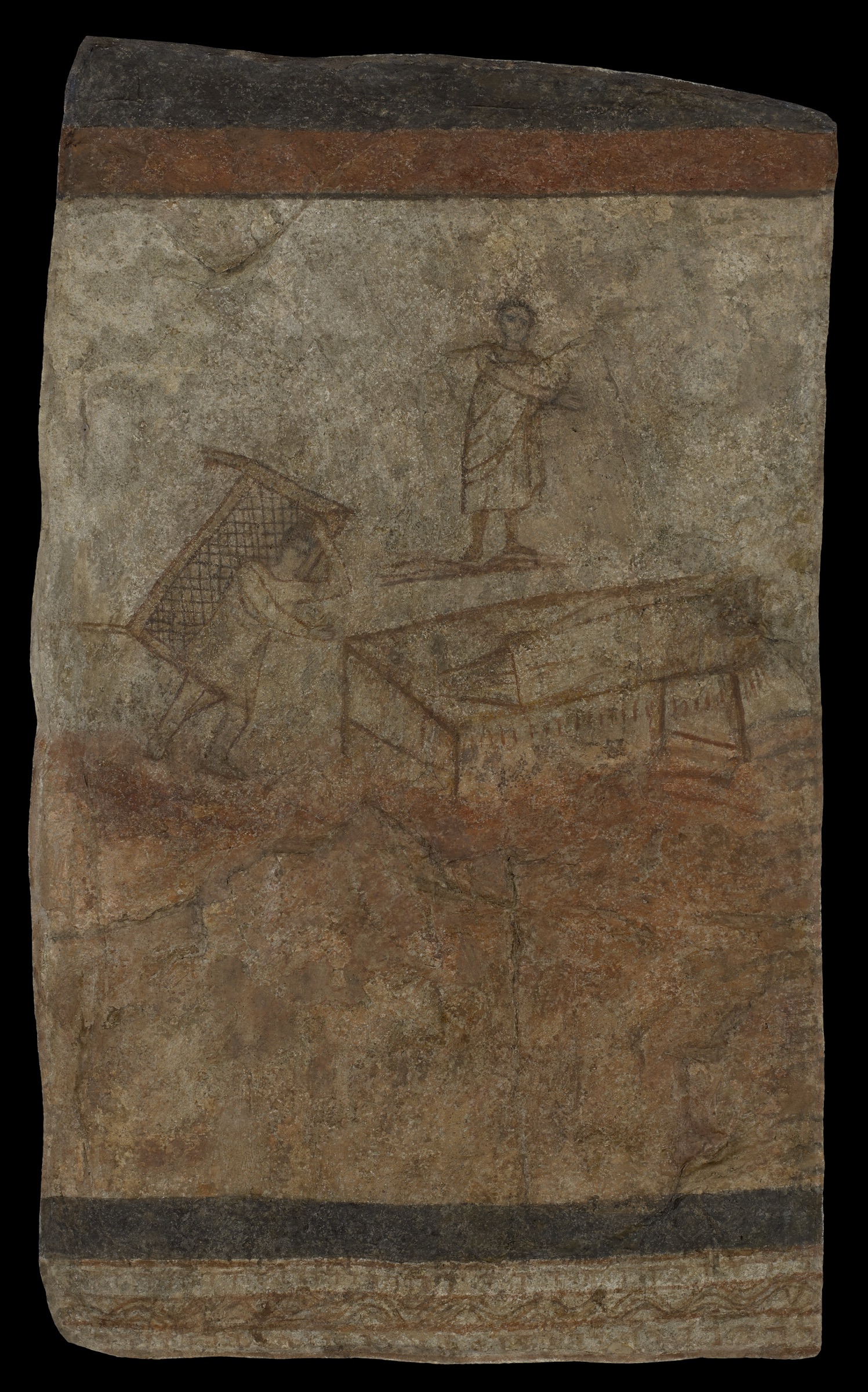
Christians in Dura-Europos, a Roman border city in Syria, turned an ordinary house into a church. It had a room for Baptism (a baptistery) with Bible scenes on the walls, such as Christ healing a paralyzed man. The excavators date the change to about AD 240. The Persians took the city in 256, and the house was buried, which saved the paintings. They are now at Yale. P: Yale University Art Gallery, Baptistery wall painting, Christ Healing the Paralytic, 1932.1202 V1: Yale University Art Gallery, Dura-Europos Excavation Archive, Christian Building V2: Yale University Art Gallery, Baptistery wall painting, Good Shepherd and Adam and Eve, 1932.1200. Yale gives the paintings a date of about 232. Other scholars date the church use to about 240 to 256.
-
Emperor Valerian started a new persecution in 257. He banned Christian gatherings and, in 258, ordered that bishops, priests, and deacons be put to death. Cyprian was beheaded at Carthage in 258. Pontius, his deacon, wrote the story of his death. P: Pontius, Life and Passion of Cyprian P: Eusebius, Church History VII.10–11, Valerian’s persecution V1: Catholic Encyclopedia, Cyprian, Valerian’s edicts and his death V2: Jona Lendering, Valerian, timeline of persecution and Cyprian’s martyrdom.
-
Valerian’s son Gallienus ended the persecution after his father was captured in 260. He let Christians have their meeting places and burial grounds back. The sources date this edict between 259 and 261. P: Eusebius, Church History VII.13, the peace under Gallienus V1: Joshua J. Mark, Gallienus, World History Encyclopedia V2: Encyclopedia.com, Gallienus, Roman Emperor, edicts of 260 ending the persecution.
Controversy and heresy
- Praxeas taught in Carthage that the Father, Son, and Holy Spirit are one and the same person (this is called modalism). Tertullian answered him. He wrote that God is one, yet the Father, Son, and Spirit are three persons. He also wrote that Christ is one person with two natures, divine and human. P: Tertullian, Against Praxeas 2, 9, and 27 V1: Catholic Encyclopedia, Tertullian, Against Praxeas V2: Benedict XVI, Tertullian, 30 May 2007 audience.
- Sabellius taught in Rome in the early 200s that the one God shows himself in three roles. Bishop Dionysius of Alexandria wrote against the same teaching among bishops in Libya in the 250s. P: Eusebius, Church History VII.6, the heresy of Sabellius V1: Catholic Encyclopedia, Monarchians, Sabellius in Rome V2: Catholic Encyclopedia, Dionysius of Alexandria, Sabellianism in Libya.
- Cyprian and Stephen, bishop of Rome, disagreed about Baptism given by groups outside the church. Cyprian said it was not Baptism, so converts had to be baptized. Stephen said they did not need a second Baptism. Dionysius of Alexandria sided with Stephen. P: Eusebius, Church History VII.2–5 V1: Catholic Encyclopedia, Cyprian, rebaptism of heretics V2: Benedict XVI, Cyprian, 2007 audience.
- Novatian, a Roman priest, split the church in Rome in 251. He said the church had no power to forgive those who had denied Christ under persecution. He set himself up as a rival bishop against Cornelius. Eusebius calls him Novatus. P: Eusebius, Church History VI.43, Novatus and his heresy V1: Catholic Encyclopedia, Novatian and Novatianism V2: Cyprian, Epistle 51, to Antonianus about Cornelius and Novatian. Cyprian also wrote that one cannot have God as Father without the church as mother. That claim is in P: Cyprian, On the Unity of the Church 6.
- Mani, a Persian, began a new religion in the 200s. It said the world is a fight between two eternal powers, good and evil. It borrowed Christian words and ideas. Christian writers fought it, and the Augsburg Confession still names the Manichaeans. Sources give different dates for Mani’s birth (215 or 216) and death (274 to 277). P: Acts of the Disputation with Manes (Archelaus), a Christian account written after Mani’s time V1: Catholic Encyclopedia, Manichaeism, life of Mani and his teaching V2: Mark Cartwright, Shapur I, World History Encyclopedia, Mani at Shapur’s court.
Councils and major events
No council of this century is numbered as ecumenical (meaning for the whole church) by Rome or the East. These regional synods shaped doctrine.
- Synods at Carthage and at Rome, 251: Bishops met in Africa and in Italy about those who had denied Christ. Both agreed to restore the fallen to Communion after penance. The Roman synod excommunicated Novatian. P: Cyprian, Epistle 51, §§5–6, the two councils V1: Catholic Encyclopedia, Novatian and Novatianism, the council of sixty bishops V2: Eusebius, Church History VI.43, the synod at Rome.
- Lutheran classification: Received. Both synods let repentant sinners return to Communion, and the Augsburg Confession condemns the Novatians, who refused to absolve those who fell after Baptism. Augsburg Confession XII.1–9
- Carthage council on Baptism, 256: Bishops under Cyprian ruled that converts from heretical groups must be baptized. The edition at New Advent says AD 257, but most modern scholars say 256. P: Council of Carthage, opening statement and Cyprian’s judgment V1: Catholic Encyclopedia, Cyprian, rebaptism of heretics V2: Augustine, On Baptism VI, examination of Cyprian’s council.
- Lutheran classification: Spurious. The council said Baptism outside the church is no Baptism. The Confessions teach that Christ’s word and command make a Sacrament work. A faulty minister does not cancel it. Water and Christ’s word make a valid Baptism. Augsburg Confession VIII.1–3 and Large Catechism, Baptism 53–54, 60. This judges the council’s teaching. It does not erase the meeting.
- Antioch synods against Paul of Samosata, 264 to 268: Bishops met several times about Paul, bishop of Antioch, who taught that Christ was only a man. The last synod removed him. Paul kept the church house for a few years until Emperor Aurelian settled the matter in 272. Sources differ on the date of the last session, so this outline gives no exact year. P: Synodal letter in Eusebius, Church History VII.27–30 V1: Catholic Encyclopedia, Paul of Samosata V2: Philip Schaff, History of the Christian Church II, §150, Paul of Samosata.
- Lutheran classification: Received. The synods defended Christ’s true deity against a teacher who made him a mere man. The Augsburg Confession also condemns the Samosatenes, though it describes their error differently. Augsburg Confession I.1–6
Major people
- Tertullian (about 160 to about 220), a lawyer from Carthage, wrote in Latin. He gave the church the phrase “one substance, three persons” for the Trinity. He later joined the Montanists, a movement that claimed new prophecies. P: Tertullian, Against Praxeas 2 V1: Catholic Encyclopedia, Tertullian, Trinitarian doctrine and Montanism V2: Benedict XVI, Tertullian, 30 May 2007 audience.
- Clement of Alexandria (died about 215) headed the church’s teaching school in Alexandria, Egypt. His book The Instructor teaches that Baptism brings the light of Christ. P: Clement, The Instructor (Paedagogus) I.6 V1: Catholic Encyclopedia, Clement of Alexandria V2: Benedict XVI, Clement of Alexandria, 2007 audience.
- Origen (about 185 to about 253) led the school at Alexandria from the age of 18. He set the Hebrew Bible beside Greek translations in six columns, in a work called the Hexapla. He was tortured under Decius. P: Eusebius, Church History VI.3 and VI.16 V1: John Francis Fenlon, Catholic Encyclopedia, Hexapla, opening and column arrangement V2: Benedict XVI, Origen, 2007 audience.
- Hippolytus (died about 236) was a Roman priest and writer. He attacked other teachers and a Roman bishop. He was sent to Sardinia in 235 and died there. Scholars still debate whether he was a rival bishop of Rome. P: Eusebius, Church History VI.22, works of Hippolytus V1: Catholic Encyclopedia, Hippolytus of Rome V2: Jerome, Lives of Illustrious Men 61.
- Cyprian was bishop of Carthage from about 249 to his death in 258. He led his church through Decius’s and Valerian’s persecutions and through arguments about repentance, church unity, and Baptism. P: Cyprian, On the Lapsed, and Carthage council’s opening V1: Catholic Encyclopedia, Cyprian V2: Benedict XVI, Cyprian, 2007 audience. Read the council opening at P: Carthage.
- Dionysius of Alexandria was bishop from about 247 to 264. He helped settle the Baptism dispute and wrote against Sabellius. P: Eusebius, Church History VII.4–6 V1: Catholic Encyclopedia, Dionysius of Alexandria V2: Jerome, Lives of Illustrious Men 69.
- Perpetua, a young mother, and Felicity, a slave woman, were killed in the arena at Carthage in AD 203. Part of the Passion is Perpetua’s own prison diary. She was baptized while under arrest. P: Passion of Saints Perpetua and Felicity, §§2–3,15,20–21 V1: Catholic Encyclopedia, Saints Felicitas and Perpetua V2: Dictionary of African Christian Biography, Felicitas and Perpetua.
Wider world
- In AD 212, Emperor Caracalla made nearly all free people in the Roman Empire citizens. Cassius Dio says he did it to raise more tax money. P: Cassius Dio, Roman History 78.9, Epitome of Book 78 V1: Jona Lendering, Caracalla, Constitutio Antoniniana V2: Joshua J. Mark, Caracalla, World History Encyclopedia.
- About AD 224, Ardashir I, a Persian, overthrew the Parthian dynasty and founded the Sasanian Empire. It became Rome’s chief rival in the east. Some sources date the change as late as 227. P: Cassius Dio, Roman History 80.3–4, Epitome of Book 80 V1: Alonso Constenla Cervantes, Sasanian Empire, World History Encyclopedia V2: Ralph W. Mathisen, Alexander Severus, De Imperatoribus Romanis, the Persian war.
- In AD 260, Persia’s King Shapur I captured the Roman emperor Valerian. P: Eutropius, Short History 9.7, with Livius’s note dating the capture to 260 V1: Jona Lendering, Valerian, AD 260 entry V2: Joshua J. Mark, Shapur I, World History Encyclopedia.
- Diocletian became Roman emperor in AD 284. He ended fifty years of civil war and weak rule. P: Eutropius, Short History 9.19–20 V1: Donald L. Wasson, Diocletian, opening and rise to power V2: Ralph W. Mathisen, Diocletian, De Imperatoribus Romanis, introduction and early reign. Eutropius does not give the year. The two modern accounts do.
Confessional Lutheran connection
- Teaching prompt, Christology: Start with Tertullian, Against Praxeas 2 and 27 first. Then turn to Augsburg Confession I and III next. Ask what the later, more exact language adds about Christ’s person. Curriculum’s confessional judgment: the Confessions confirm Tertullian’s main point. Christ is one person with two natures.
- Teaching prompt, Baptism: Apply Augsburg Confession VIII.1–3 and Large Catechism, Baptism 53–54 to the dispute between Cyprian and Stephen. Ask what makes a Baptism valid. The Confessions answer that Christ’s word and water make it valid, not the minister’s standing.
- Teaching prompt, church and salvation: Start with Cyprian, On the Unity of the Church 6 first. Then turn to Augsburg Confession VII and VIII next. Ask where the Confessions place the church and what they say about unworthy ministers.
- Teaching prompt, Lord’s Supper: Read Augsburg Confession XII.1–9. Compare it with the return of the lapsed. Ask how Christ’s forgiveness, absolution (the pastor’s declaration of forgiveness), and a return to Communion fit together. Curriculum’s confessional judgment: the Confessions side with Cyprian’s repentance and restoration against Novatian.
- Teaching prompt, Baptism in art: The Dura-Europos baptistery shows that early Christians linked Baptism to Christ’s healing and shepherding. Read Small Catechism, Baptism. Ask how the Catechism explains what Baptism does.
- Teaching comparison: Read Perpetua’s Baptism and confession in Passion §§3,6. Discuss Christ’s saving promise in persecution without treating dreams as doctrine. Historical reading, Lutheran norm: Augsburg Confession III to V and IX.
- The Hexapla served the study of Scripture. The Confessions call Scripture the only rule and standard for teaching. The source is Formula of Concord, Epitome, Rule and Norm 1 here. The history does not tie this work directly to Christ’s person or the Sacraments, so this outline claims no tie.