Week 10 · Medieval
10th centuryAD 901–1000
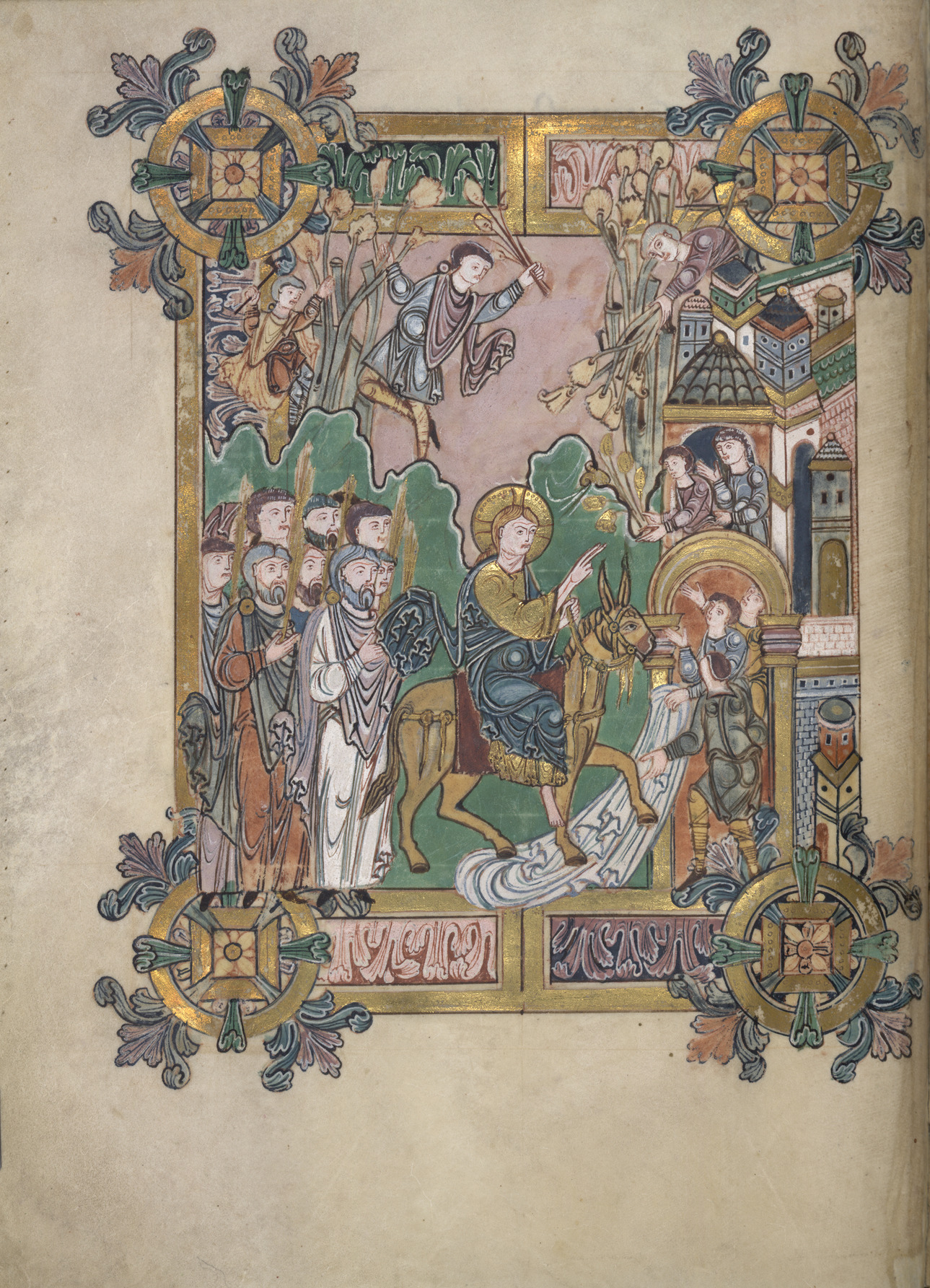 About this artwork →
No council that Rome or the Eastern churches number as ecumenical met in this century. Rome’s eighth council met in 869–870 and its ninth in 1123. P: Catholic Encyclopedia, General Councils V1: New World Encyclopedia, Ecumenical Council, list of Roman Catholic councils V2: Catholic Encyclopedia, Councils of Nicæa.
Church life
- William of Aquitaine founded the monastery of Cluny in 910. He gave land to monks who followed the Rule of Benedict (the sixth-century guide to monastic life). He made Berno the first abbot (head of the monastery). The charter rests the gift on Christ’s words about making friends of the poor, and it asks the monks to pray for the donors’ souls. P: Foundation charter V1: Catholic Encyclopedia, Congregation of Cluny V2: Britannica (1911), Cluny.
- Cluny grew into a network. Its abbot named the heads of the daughter houses, which stayed under Cluny’s rule, unlike older monasteries that governed themselves. P: Britannica (1911), Cluny V1: Catholic Encyclopedia, Congregation of Cluny V2: Foundation charter, abbot and election clauses. The charter itself shows only the first house, not the later network.
- In 988 Prince Vladimir of Kiev had the idol of Perun thrown down. He then ordered the people of his city into the Dnieper river to be baptized. The Primary Chronicle (a Russian history written long after the event) tells this story. Baptism here is the church’s entry rite, not only a political act. P: Primary Chronicle, AD 988 V1: Catholic Encyclopedia, Vladimir V2: UTexas, Path to Christianity in Early Russia.
- English kings and bishops led a monastic reform. In 963 Æthelwold became bishop of Winchester. In 964 King Edgar replaced the secular priests (priests who lived outside monasteries) of the Winchester minsters (large churches) with monks. Dunstan, archbishop of Canterbury from 959, supported the reform, though sources differ on how active he was. The reformers wanted the Mass and daily prayer kept with order and care. P: Anglo-Saxon Chronicle, annals 959–964 V1: Catholic Encyclopedia, St. Ethelwold V2: Britannica (1911), Dunstan.
- Æthelwold ordered a service book, the Benedictional of St Æthelwold, made at Winchester between 963 and 984, probably in the 970s. It holds the blessings that the bishop spoke during Mass. It has 28 full-page paintings, including one of Christ’s Baptism. P: British Library record of the Entry into Jerusalem page, via Wikimedia Commons V1: British Library catalogue, Add MS 49598, Benedictional of St Æthelwold V2: Britannica (1911), Illuminated Manuscripts.

Controversy and heresy
- In 963 a synod at Rome removed Pope John XII and elected Leo VIII. Liutprand of Cremona, who backed Emperor Otto, reports that John was accused of murder, adultery, and other crimes. Treat these as accusations. John refused to accept the synod. Many later writers saw Leo’s election as invalid because he was a layman who received all orders at once. P: Liutprand, Chronicle of Otto’s Reign, chapters 4–6 and following, printed pp. 216–229 V1: Catholic Encyclopedia, John XII V2: Schaff, History of the Christian Church IV, §64.
- Strong Roman families controlled the papacy for much of the early tenth century. Liutprand blames Theodora and her daughter Marozia, and says Marozia’s son became Pope John XI. Liutprand hated the Romans, and modern writers doubt some of his charges. The sacraments are at stake because the pope presided over them. P: Liutprand, Antapodosis II, chapters 47–48, printed pp. 91–92 V1: Catholic Encyclopedia, John X V2: Catholic Encyclopedia, John XI.
- Teaching question: Compare reforming a corrupt office with the claim that a corrupt minister makes Christ’s sacraments invalid. P: Liutprand, Chronicle P: Augsburg Confession VIII P: Large Catechism, Baptism P: Large Catechism, the Lord’s Supper.
Councils and major events
- Rome, November and December 963: This was a local synod (a regional church court) in a fight between the emperor and the pope. Otto, whom the pope crowned in February 962, was in Rome with his army. The synod met on 6 November and removed John on 4 December. P: Liutprand, Chronicle of Otto’s Reign V1: Catholic Encyclopedia, John XII V2: Schaff, History of the Christian Church IV, §64. The synod dealt with office and discipline, not with teaching about Christ or the sacraments.
- Lutheran classification: Not classified. The synod judged a pope’s conduct and the emperor’s role, and it set out no doctrine. The Confessions say that bishops’ authority rests on the Gospel and that no pope rules the church by divine right. Treatise on the Power and Primacy of the Pope
- Charroux, 989: Archbishop Gunbald of Bordeaux and his bishops met at Charroux. They threatened to cut off anyone who robbed churches, robbed the poor, or struck unarmed clergy. This began the Peace of God movement (church efforts to limit private warfare). Some older reference works date the synod to 990. P: Synod of Charroux V1: Britannica (1911), Truce of God V2: Catholic Encyclopedia, Truce of God. The synod protected the weak by the church’s discipline, not by a new teaching about Christ or the sacraments.
- Lutheran classification: Not classified. The decrees set penalties for violence and settled no doctrine. The Confessions ask the church to teach rulers their duty and leave the sword to the civil authority. Augsburg Confession XVI
- Cluny’s foundation charter forbade every count, bishop, and king to take the monks’ property. It also forbade the pope to do so, and it barred anyone from putting a head over the monks against their will. It placed the monks under the protection of Peter, Paul, and the Roman bishop. It let the monks elect their own abbot. A charter states what the donor wanted, not what always happened. P: Foundation charter, clauses on election, protection, and property V1: Catholic Encyclopedia, Congregation of Cluny V2: Britannica (1911), Cluny.
- Otto I was crowned emperor by John XII at Rome on 2 February 962. P: Liutprand, Chronicle of Otto’s Reign, chapter 3, printed p. 216 V1: Catholic Encyclopedia, John XII V2: Schaff, History of the Christian Church IV, §64.
Major people
- Odo, abbot of Cluny (about 879–942), wrote the Life of Gerald of Aurillac, a count who died in 909. Odo never met Gerald. The book shows a layman living a holy life: Gerald forgave an enemy, gave gifts to him, and in one scene stayed at Mass while his castle was threatened. P: Life of Gerald, chapters 39–40 V1: Catholic Encyclopedia, Odo of Cluny V2: Nelson, Gerald of Aurillac. The Life presents holiness outside the monastery. Discussing that point is our own use of the text.
- Vladimir, prince of Kiev, was baptized in 988 and married Anna, sister of the Byzantine emperor Basil II. The linked Chronicle excerpt tells of the mass Baptism at Kiev but leaves out the Anna passage, which the secondary sources summarize. The date, place, and order of events are debated. P: Primary Chronicle, AD 988 V1: Catholic Encyclopedia, Vladimir V2: SPbU, Anna Porphyrogenita.
- Liutprand of Cremona went to Constantinople for Otto in 968 to ask for a Byzantine bride for Otto’s son. His report is one-sided and angry. Separate what he saw from what he says in insult. P: Liutprand, Embassy to Constantinople V1: Catholic Encyclopedia, Liutprand V2: Britannica (1911), Liudprand.
- Æthelwold (died 984), bishop of Winchester from 963, refounded monasteries and ordered the Benedictional that bears his name. P: Anglo-Saxon Chronicle, annals 963–964 V1: Catholic Encyclopedia, St. Ethelwold V2: British Library catalogue, Add MS 49598, Benedictional of St Æthelwold.
- Dunstan, archbishop of Canterbury, died in 988. He advised King Edgar, who was crowned at Bath in 973. P: Anglo-Saxon Chronicle, annals 973 and 988 V1: Catholic Encyclopedia, St. Dunstan V2: Britannica (1911), Dunstan.
Wider world
- 937: King Athelstan defeated an alliance of Scots, Strathclyde Britons, and Dublin Vikings at Brunanburh. The Chronicle translation linked here spells the place “Brumby.” P: Anglo-Saxon Chronicle, annal 937 V1: Royal Household, Athelstan biography V2: British Museum/LGfL timeline, 937.
- 955: Otto I defeated the Hungarian raiders at the Lechfeld, near Augsburg, on 10 August. Bishop Ulrich of Augsburg had defended the city. The victory ended the Hungarian raids on Germany. P: Widukind, Deeds of the Saxons, on the Lechfeld V1: Catholic Encyclopedia, Otto I V2: Britannica (1911), Otto I.
- 987: The nobles chose Hugh Capet as king of the West Franks at Senlis. Archbishop Adalbero of Reims led the choice, and Hugh was crowned in July, probably at Noyon. His family ruled France for centuries. P: Richer, Histories, election of Hugh Capet V1: Catholic Encyclopedia, Hugh Capet V2: Britannica (1911), Hugh Capet.
- About 1000: Leif Erikson sailed to Vinland in North America. The Norse sagas tell the story, and the version linked here dates from about 1387. A Norse camp at L’Anse aux Meadows in Newfoundland dates from about the same time. P: Saga of Eric the Red, Leif’s voyage V1: Parks Canada, L’Anse aux Meadows V2: Britannica (1911), Leif Ericsson.
Confessional Lutheran connection
Each item below is the curriculum’s confessional judgment. The history above is kept separate from it.
- Christology: The church rests on Christ, true God and true man, not on a pope, a ruler, or a reformer. The popes and families in this century failed, and Christ’s work did not. Confessional judgment: the Gospel and the sacraments depend on Christ’s person and promise, not on the holiness of church leaders. P: Augsburg Confession III P: Solid Declaration VIII.
- Baptism: Vladimir’s people were baptized at their ruler’s order. Confessional judgment: Baptism is God’s gift in water joined to his Word, and it gives forgiveness and new life to each person who is baptized. A ruler’s choice does not give or remove that gift. P: Augsburg Confession IX P: Large Catechism, Baptism P: Small Catechism, Baptism.
- The Lord’s Supper: Confessional judgment: an unworthy minister does not cancel Christ’s promise in the Supper, because the sacrament rests on Christ’s institution. This answers the doubts raised by the scandals in Rome. The same article also says that false teachers must be removed. P: Augsburg Confession VIII P: Augsburg Confession X P: Solid Declaration VII P: Large Catechism, the Lord’s Supper.
- Cluny and monastic life: Cluny’s charter hoped to earn reward by giving riches. Confessional judgment: monastic life is a fine way of study and prayer, but it does not earn forgiveness. Righteousness before God comes by faith in Christ. P: Augsburg Confession IV P: Augsburg Confession XXVII P: Apology XXVII.
- Church and emperor: Confessional judgment: the church’s power is to preach the Gospel and give the sacraments, and the ruler’s power is to keep peace. Neither ruler nor bishop is to take over the other’s task, as happened in the quarrel of Otto and John XII. P: Augsburg Confession XXVIII P: Treatise on the Power and Primacy of the Pope.
- Wider world: The entries on Brunanburh, Lechfeld, Hugh Capet, and Leif Erikson have no direct tie to Christ or the sacraments. They serve only to place the church’s story in time.
- Teaching question: Use Liutprand’s embassy to compare the claims of the western and Byzantine emperors. Separate his observations from his insults and explanations. P: Liutprand, Embassy to Constantinople V1: Catholic Encyclopedia, Liutprand V2: Britannica (1911), Liudprand.